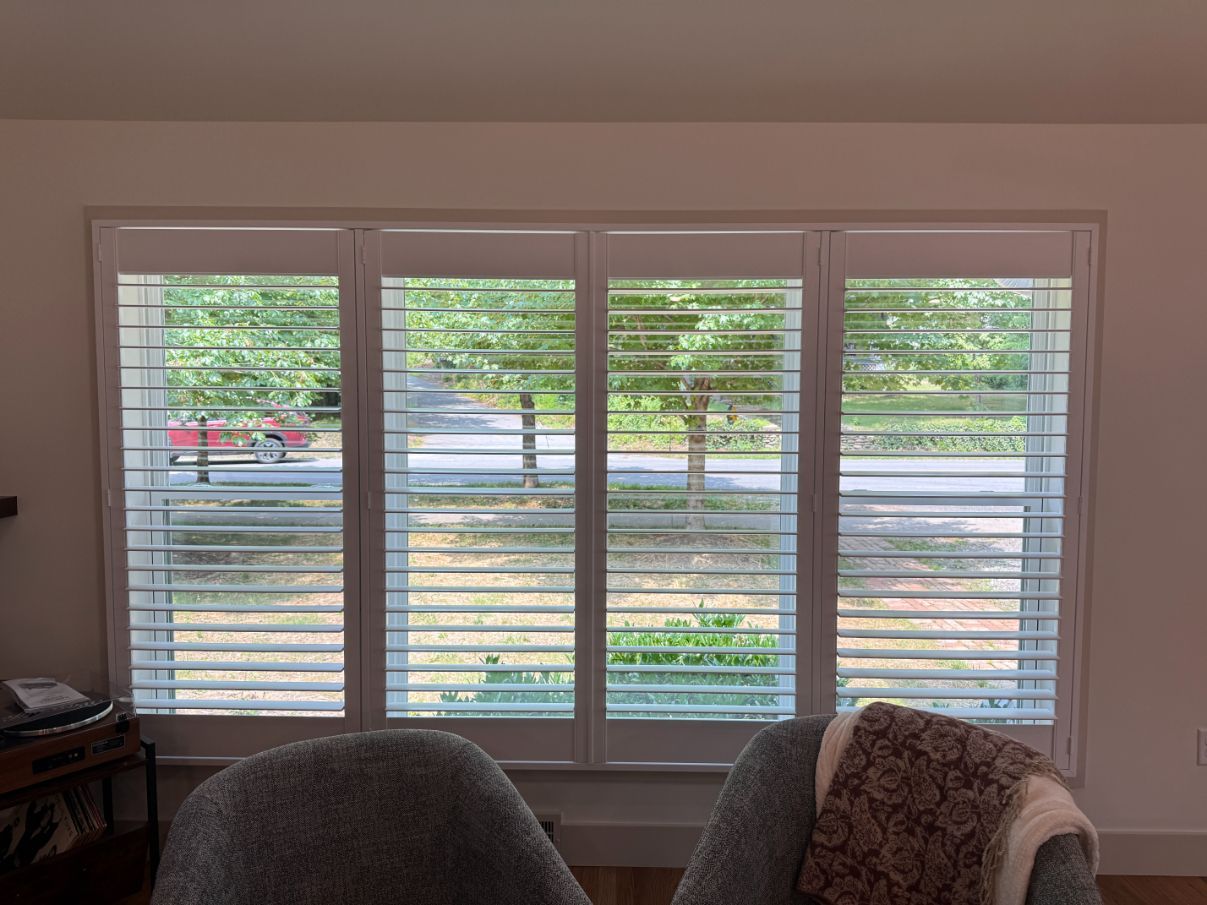

Kitchen Window Treatments: The Complete Guide to Blinds, Shades & Shutters for Every Kitchen Window
Your kitchen is one of the hardest-working rooms in your home, and the windows in that space face unique challenges that no other room does. Between cooking grease, steam from boiling pots, splashing water at the sink, and intense afternoon sun beating through the glass, choosing the right kitchen window treatments requires more thought than simply picking something that looks nice. The wrong choice can warp, stain, or deteriorate within months, while the right window treatment will enhance your kitchen's beauty and function for years to come.
At Love is Blinds, we've installed thousands of kitchen window treatments across Western North Carolina, from modern farmhouse kitchens in Asheville to cozy mountain retreats in Waynesville. We know exactly which products hold up in kitchen environments and which ones don't. This comprehensive guide covers every type of kitchen window, every product option, and the real-world performance data you need to make the right decision.
Whether you're renovating your entire kitchen or simply updating tired old blinds above the sink, you'll find everything you need below — organized by window location, budget tier, and kitchen design style.
1. Why Kitchen Windows Need Special Attention
Kitchen windows face a combination of environmental stressors that no other room in your home experiences simultaneously. Understanding these challenges is the first step toward choosing window treatments that will look beautiful and last for years. The biggest enemies of kitchen window treatments are moisture, heat, grease, and UV exposure — often all at once.
Steam rises from pots and pans on the stove, coating nearby window treatments with moisture that can cause warping, mildew, and discoloration over time. Cooking oils and grease become airborne during frying and searing, creating a sticky film on surfaces near the cooking area. Water splashes from the kitchen sink can soak window treatments positioned directly above, leading to water stains and material degradation. And because kitchens often feature large windows to bring in natural light for food preparation, UV exposure fades fabrics and weakens certain materials faster than in rooms with less direct sunlight.
North Carolina's humid subtropical climate adds another layer of consideration for homeowners in Hendersonville, Fletcher, and throughout the region. The high humidity levels during summer months mean moisture-resistant materials aren't just a nice-to-have — they're essential for preventing mold and mildew growth on your kitchen window treatments. That's why material selection matters more in the kitchen than any other room in your home.
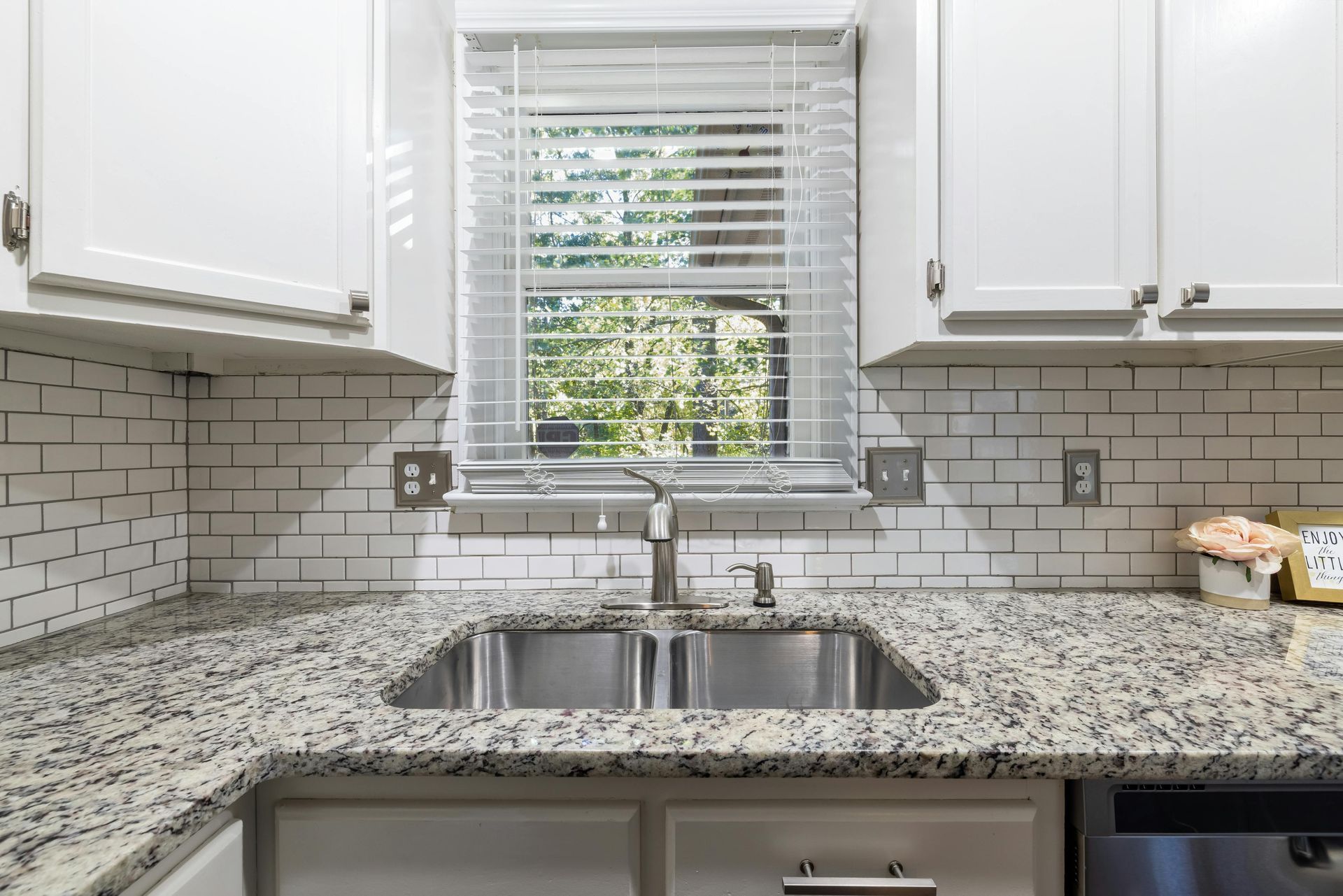
2. Best Window Treatments for Above the Kitchen Sink
The window above your kitchen sink is the most demanding window location in your entire home. It faces direct water exposure from dishwashing splashes, constant steam from hot water, and frequent contact with wet hands when adjusting the treatments. Any window treatment you install here must be waterproof or highly water-resistant, easy to operate with one hand (since your other hand is often wet or holding a dish), and simple to clean when cooking splatter inevitably reaches it.
Faux wood blinds are our top recommendation for above the kitchen sink. Made from PVC composite materials, they won't absorb water, resist warping even in high-humidity environments, and clean easily with a damp cloth. They provide excellent light control — tilt the slats up to let light in while maintaining privacy, or close them completely for a clean, finished look. Faux wood blinds also offer the classic, warm appearance of real wood at a fraction of the cost, making them the most popular choice we install in kitchens across Canton, Clyde, and Black Mountain.
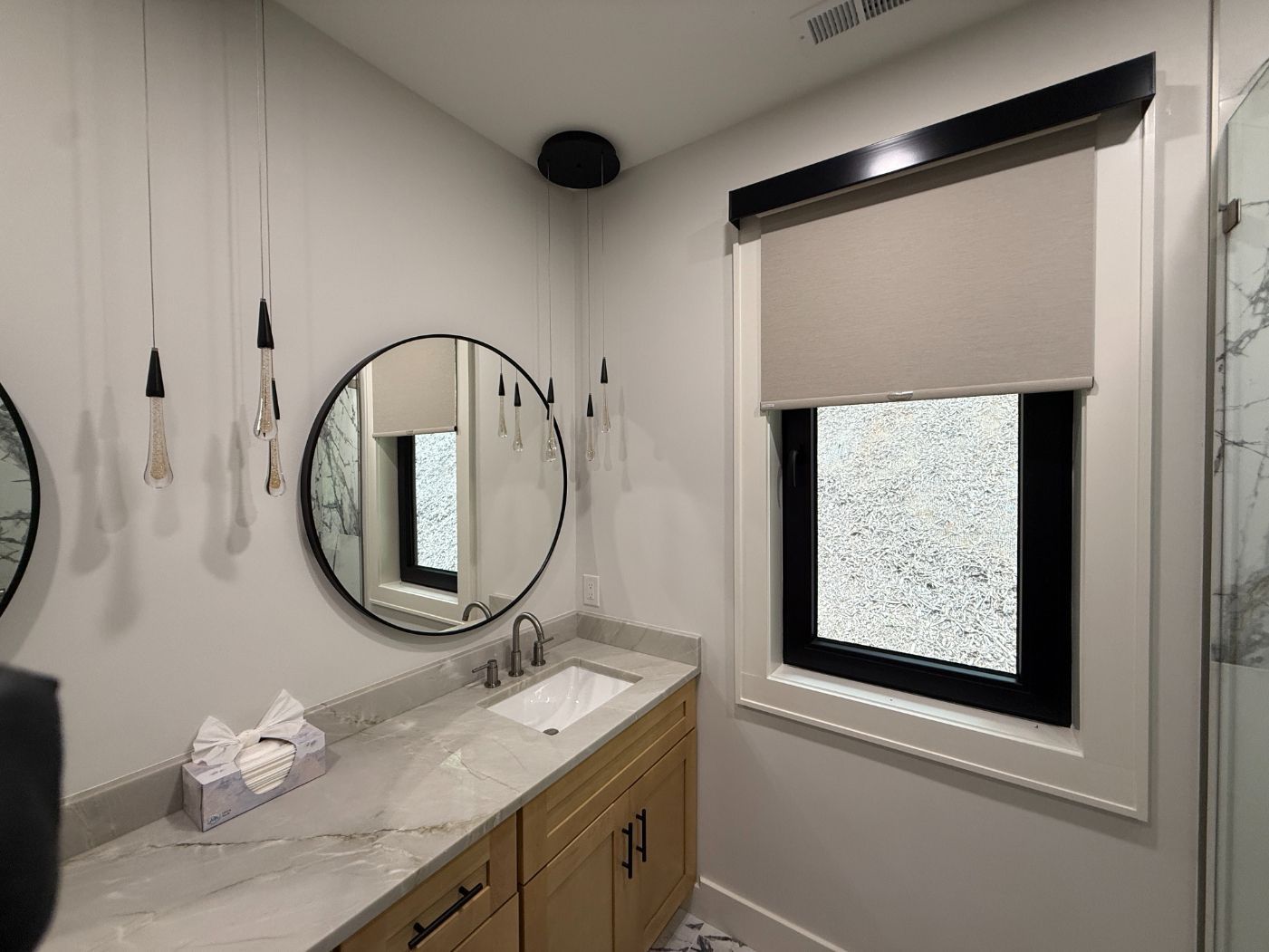
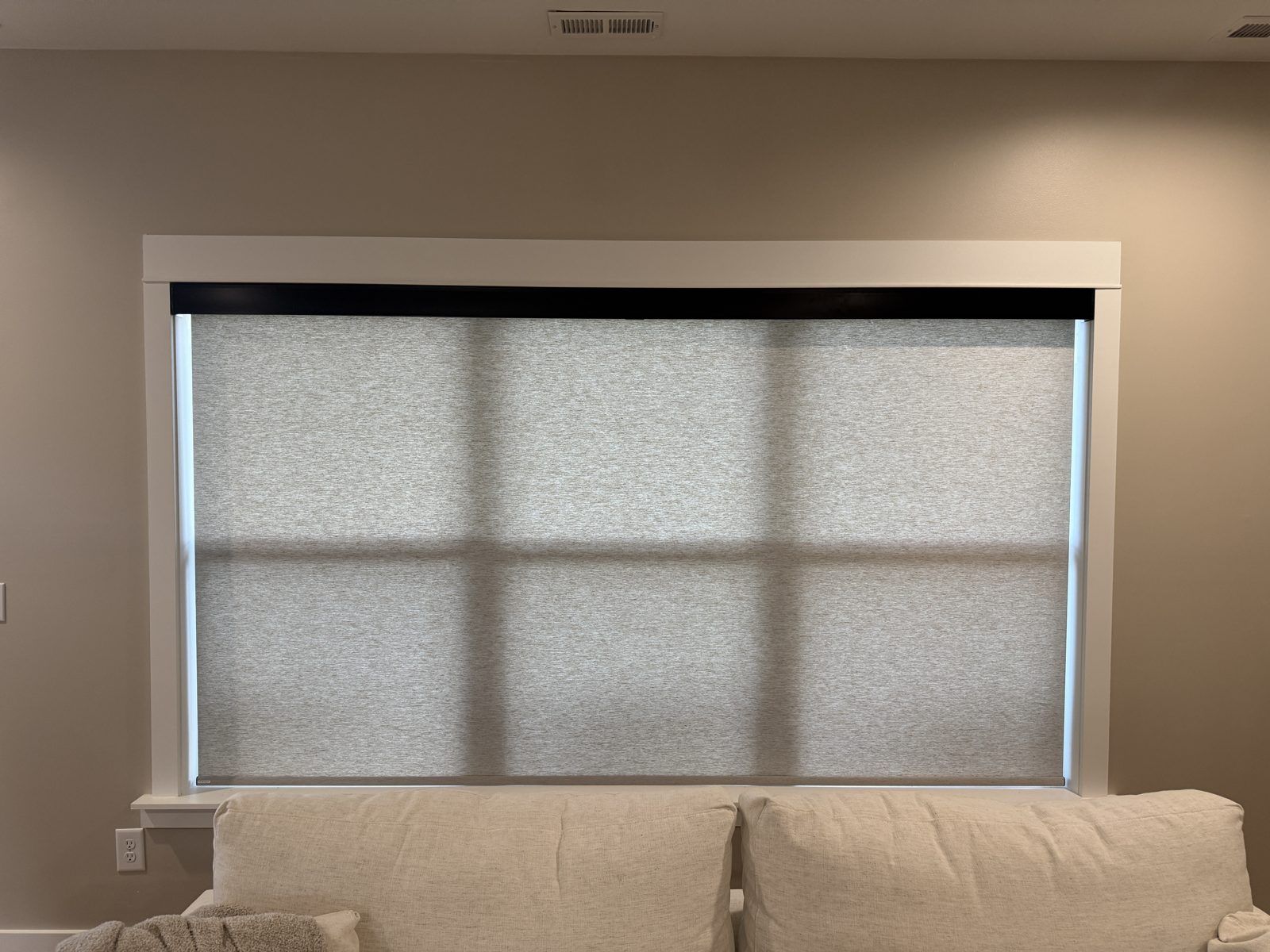
Roller shades in moisture-resistant fabrics are another excellent above-the-sink option. They roll up completely out of the splash zone when you're doing dishes and roll down smoothly when you want light control or privacy. Look for roller shades with PVC or vinyl-coated fabrics that repel water and resist staining. Their sleek, minimal profile works beautifully in contemporary and modern farmhouse kitchens alike, and they're one of the easiest window treatments to clean — simply wipe them down with a damp cloth.
Plantation shutters are the premium choice for kitchen sink windows. Their solid construction means zero moisture absorption, their louvers provide infinitely adjustable light control, and they add significant architectural character to your kitchen. Plantation shutters also increase your home's resale value — a factor we discuss in depth in our guide to how window treatments affect home value. The investment is higher upfront, but plantation shutters routinely last 20+ years in kitchen environments without showing their age.
What we don't recommend above the kitchen sink: real wood blinds(moisture causes warping), fabric Roman shades without moisture-resistant coating (they absorb water and develop mildew), and any corded window treatment (safety and convenience concerns when your hands are wet). For cordless and motorized options that work beautifully in the kitchen, check out our remote-controlled window treatments.
3. Window Treatments Near the Stove and Cooking Area
Windows near your stove and cooktop face an entirely different set of challenges than sink windows. Here, the primary concerns are heat resistance, grease exposure, and fire safety. Airborne cooking oils create a sticky film that attracts dust and grime, turning light-colored fabrics dingy and yellow over time. Heat from the burners can damage certain materials and adhesives. And most importantly, any window treatment near a heat source must be positioned safely to prevent fire hazards.
For windows within three feet of the stove, we recommend keeping the treatment pulled well above the cooking surface or choosing materials that won't drape loosely near heat sources. Roller shades excel in this location because they sit flush against the window and can be rolled completely out of the way during cooking. Choose a solar or screen fabric that withstands heat exposure without degrading, and opt for a darker color that won't show grease stains as readily as white or cream fabrics.
Faux wood blinds also work well near cooking areas because their solid slats don't absorb grease and can be wiped clean with a degreasing solution. Avoid fabric-based window treatments like woven wood shades near the stove — the natural fibers trap grease particles and become increasingly difficult to clean over time. If you love the look of woven wood, save it for kitchen windows that are well away from the cooking area.
For homeowners who want hands-free operation while cooking, motorized window treatments are a game-changer in the kitchen. Imagine adjusting your shades with a voice command to Alexa or Google Home while your hands are covered in flour or holding a hot pan. Motorized roller shades near the cooking area let you control afternoon glare without ever stepping away from the stove. Our customers in Asheville and Weaverville tell us this is one of their favorite smart home features.
4. Breakfast Nook and Dining Area Window Treatments
The breakfast nook or kitchen dining area is where aesthetics take center stage. Unlike the utilitarian demands of sink and stove windows, dining area windows are about creating atmosphere — warm morning light for coffee, soft filtered glow for evening meals, and a beautiful frame for the view outside. This is where you can get more creative with your window treatment choices because moisture and grease exposure are typically minimal.
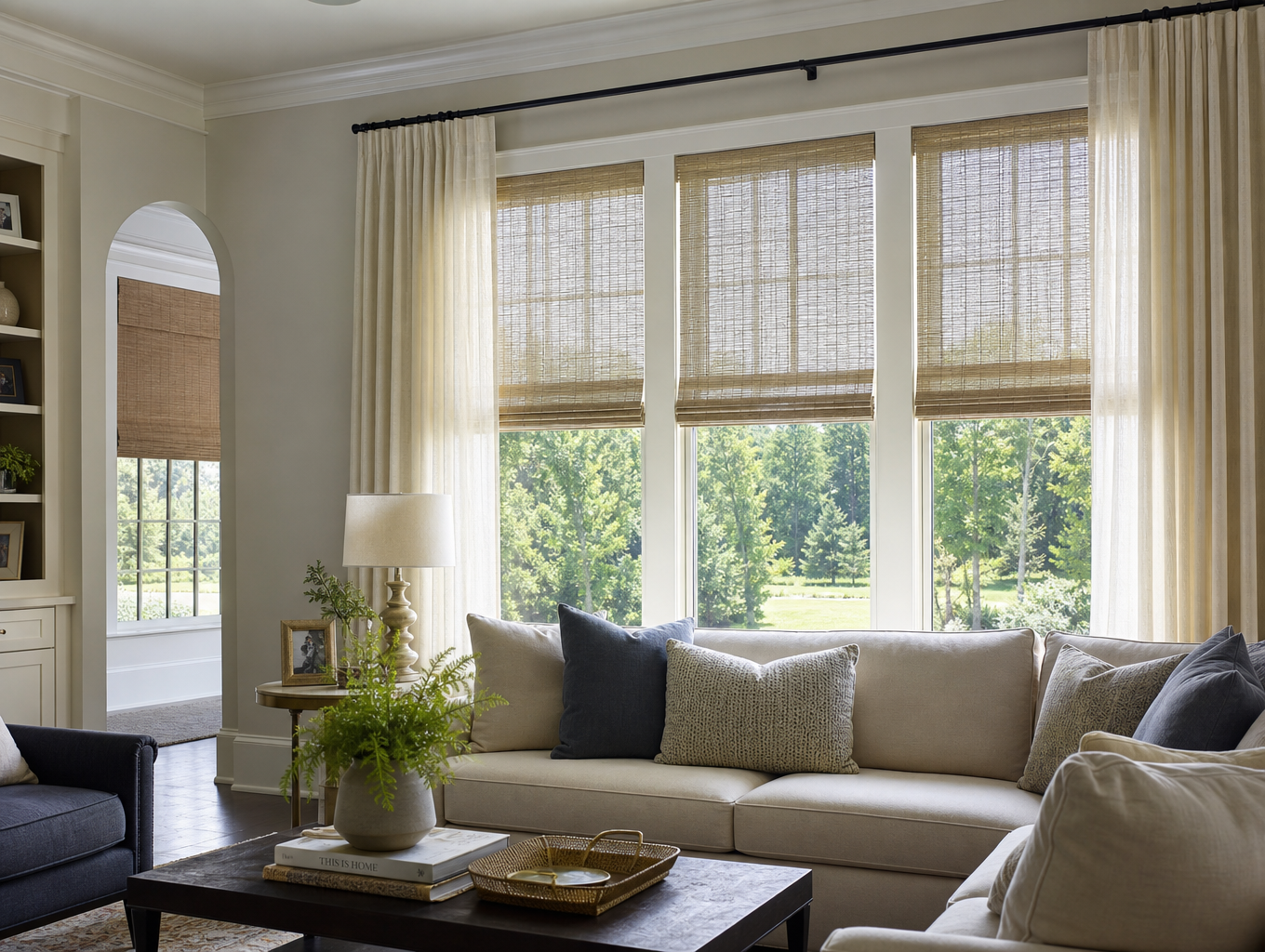
Woven wood shades are absolutely stunning in breakfast nooks. Their natural bamboo, jute, and reed textures bring warmth and organic beauty to dining spaces, filtering light with a gorgeous dappled pattern that creates an inviting atmosphere. They pair beautifully with the mountain views that so many of our customers in Sylva, Cullowhee, and Burnsville enjoy from their kitchen dining areas.
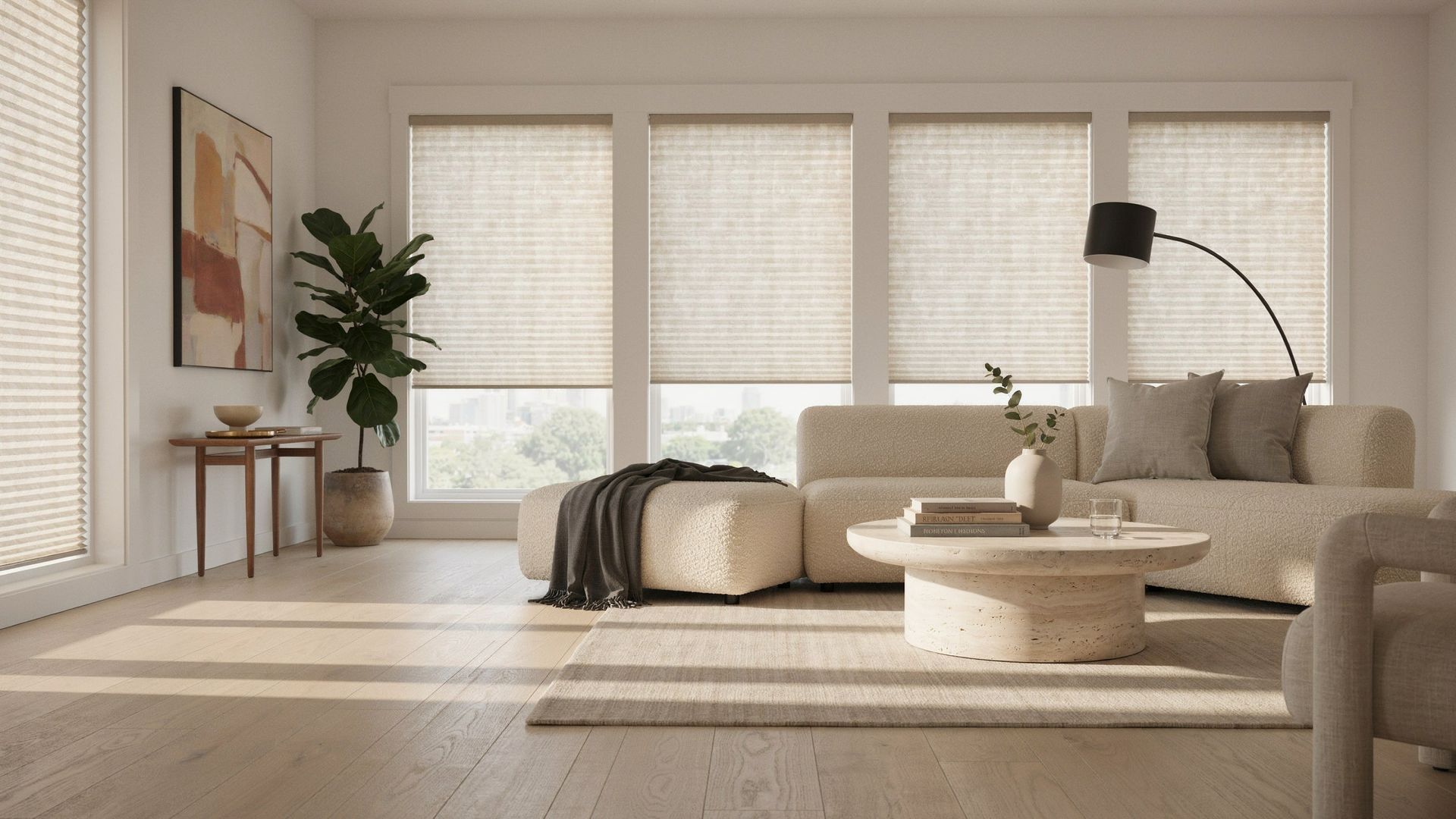
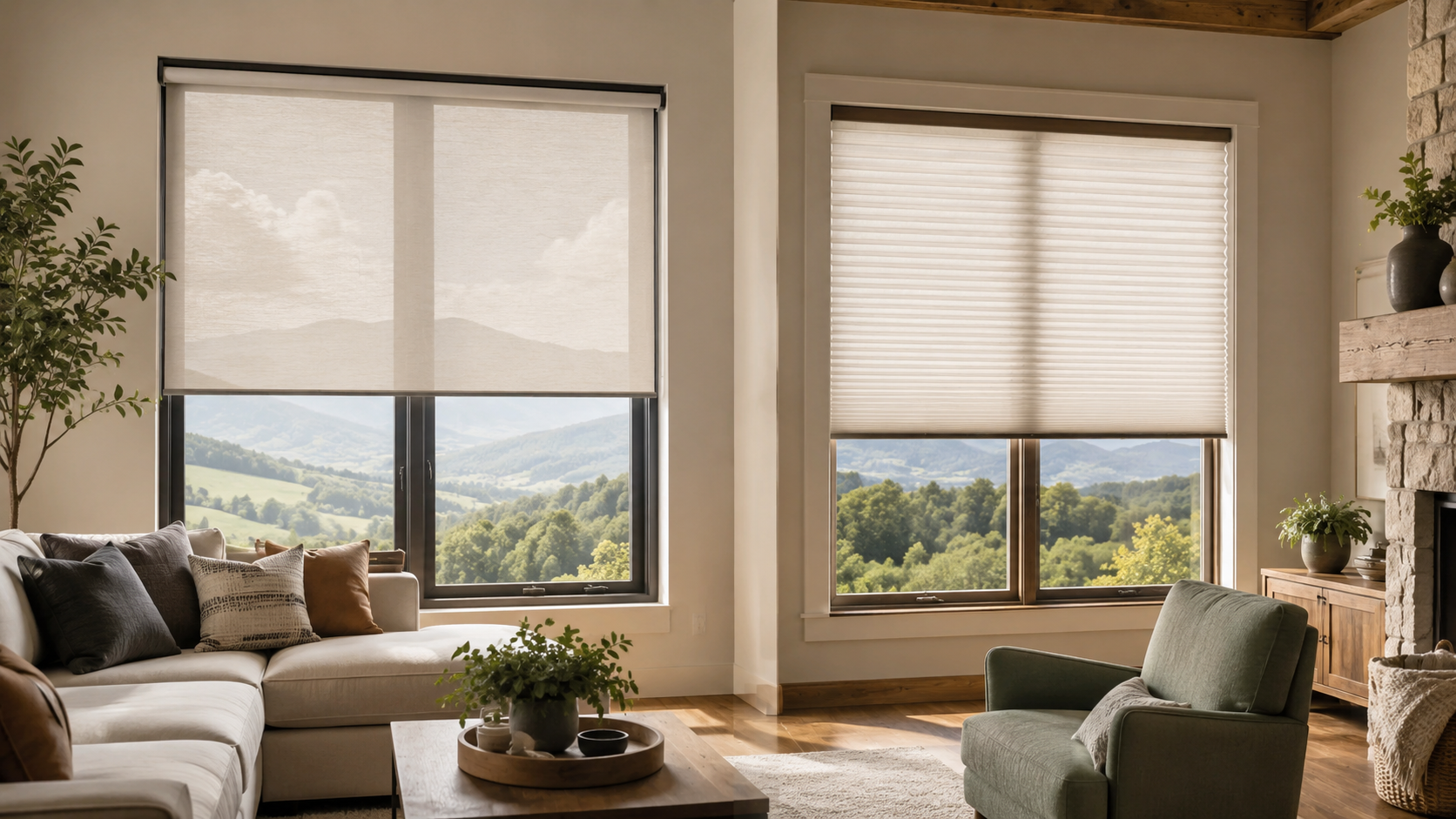
Honeycomb (cellular) shades are another excellent breakfast nook choice, particularly for homeowners focused on energy efficiency. Their unique honeycomb cell structure traps air and creates an insulating barrier that keeps your dining area comfortable year-round — cooler in North Carolina's hot summers and warmer during mountain winters. They're available in a wide range of colors, from crisp whites to rich earth tones, and offer light filtering or room darkening options depending on your preference.
Dual shades deserve special mention for breakfast nook windows. These innovative window treatments combine two fabrics in a single shade — typically a sheer and an opaque panel — allowing you to switch between soft filtered light and complete privacy without changing the hardware. They're perfect for kitchen dining areas that serve double duty as homework stations or home office spaces during the day.
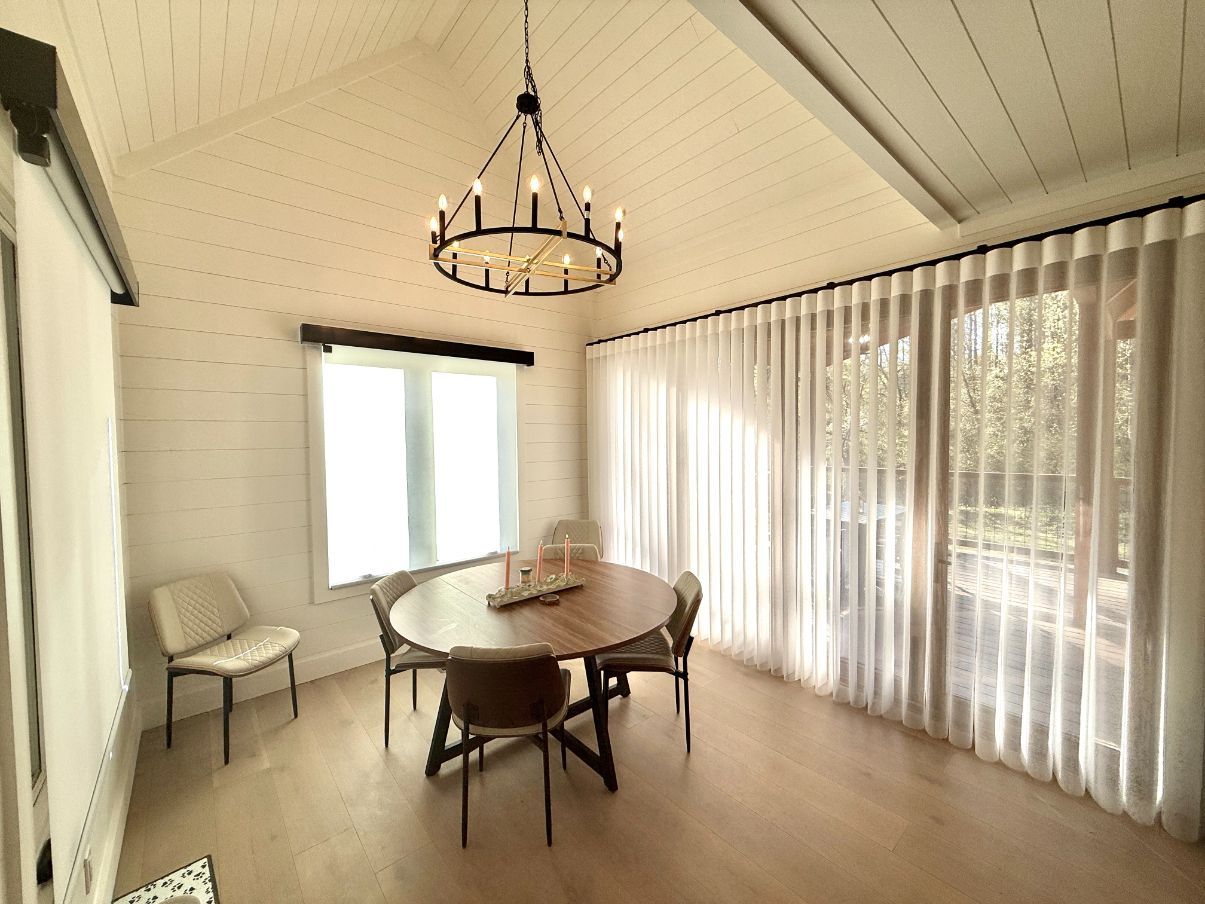
For larger breakfast nook windows or bay windows, consider panel track shades. Their wide fabric panels slide smoothly on a track system, making them ideal for covering expansive window areas while maintaining a clean, contemporary look. They're also an excellent alternative to vertical blinds for any kitchen sliding glass door — and if you're considering options for sliding doors throughout your home, don't miss our comprehensive guide on best window treatments for sliding glass doors.
5. Kitchen Window Treatments by Design Style
Modern Farmhouse Kitchen: The modern farmhouse aesthetic calls for window treatments that blend rustic charm with clean simplicity. Woven wood shades in natural finishes are the quintessential farmhouse choice, pairing perfectly with shiplap, open shelving, and apron-front sinks. For a slightly more polished farmhouse look, white faux wood blinds with wide slats deliver that classic farmhouse window aesthetic while handling kitchen conditions beautifully.
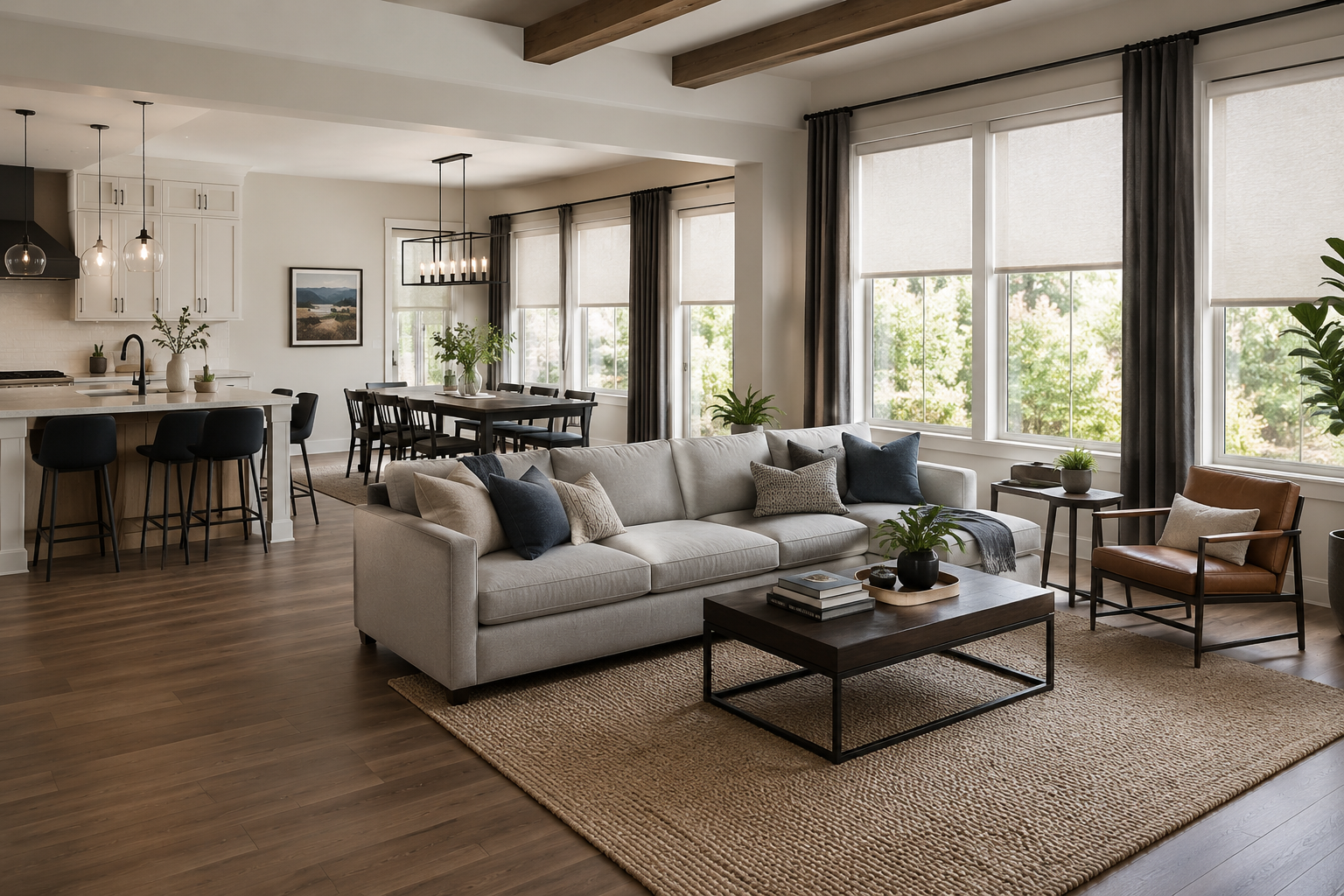
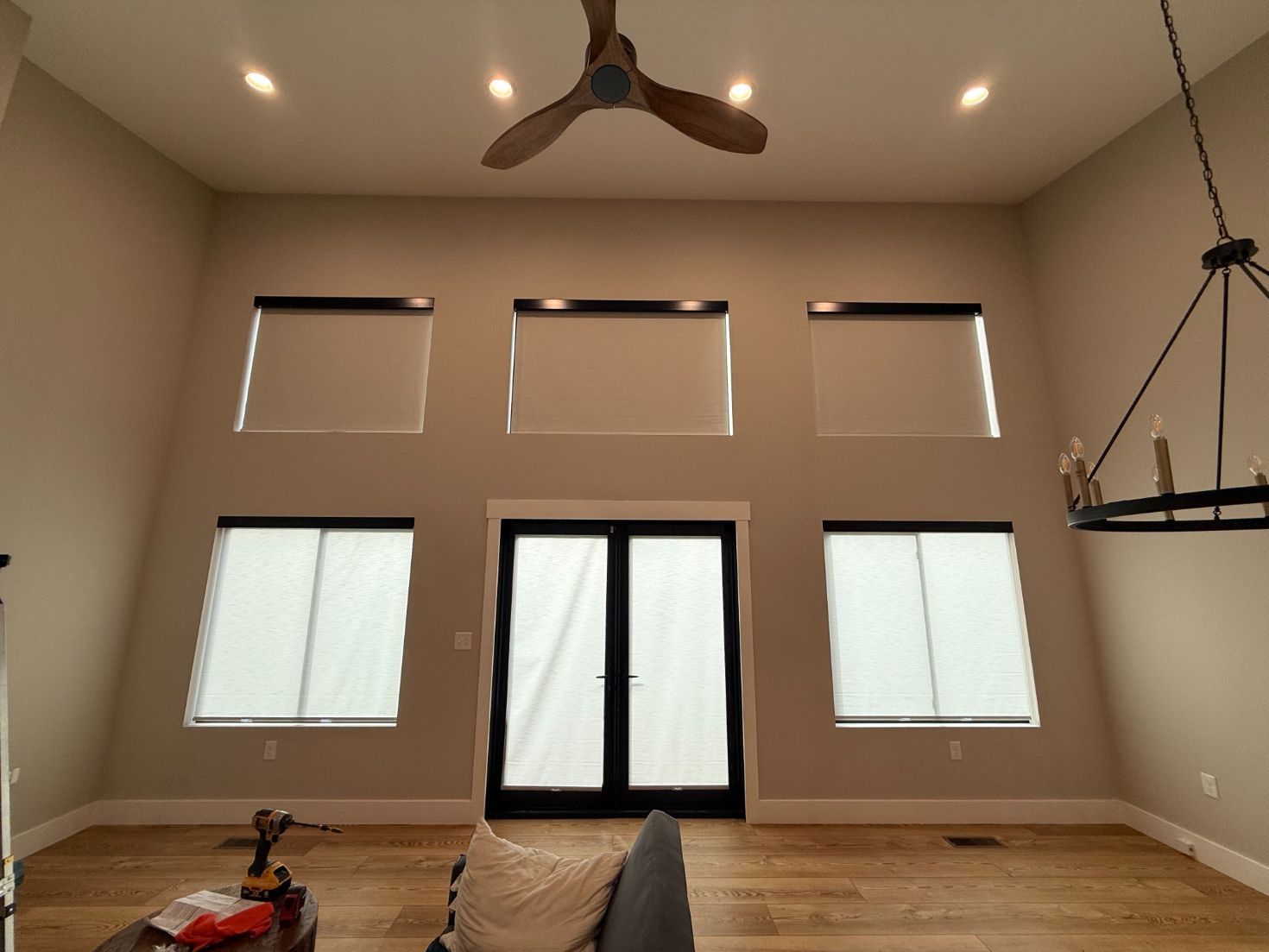
Contemporary and Minimalist Kitchen: Sleek roller shades in solid colors are the go-to choice for contemporary kitchens. Their clean lines and minimal hardware complement modern cabinetry and streamlined design. Choose a solar screen fabric in gray, black, or charcoal for a sophisticated look that also reduces glare on countertop surfaces. For the ultimate minimalist statement, motorized roller shades with no visible cords or chains keep sightlines completely clean.
Traditional Kitchen: Plantation shutters are the gold standard for traditional kitchen design. Their timeless architectural presence elevates the entire room, and they complement crown molding, raised-panel cabinetry, and classic tile backsplashes perfectly. Real wood blinds in stained finishes are also beautiful in traditional kitchens — just install them on windows well away from moisture sources.
Transitional Kitchen: Transitional kitchens blend traditional and contemporary elements, and cellular shades are the perfect match. Their soft, fabric-like appearance satisfies the traditional side while their clean profile and modern operation appeal to the contemporary sensibility. Available in hundreds of colors and opacity levels, they're versatile enough to work with virtually any transitional kitchen palette.

6. Material Durability Guide: What Survives Kitchen Conditions
Not all window treatment materials are created equal when it comes to surviving the kitchen environment. Here's our honest assessment based on years of installation experience across homes in Arden, Fletcher, and the greater Asheville area.
Excellent Kitchen Materials: PVC and composite faux wood (waterproof, grease-resistant, warp-proof), aluminum and vinyl mini blinds (fully waterproof, budget-friendly), vinyl-coated roller shade fabrics (water-resistant, easy to wipe clean), and composite plantation shutters (moisture-proof, durable, long-lasting).
Good Kitchen Materials (with placement considerations): Polyester cellular shades (moisture-resistant when placed away from direct water contact), solar screen fabrics (UV-resistant, heat-tolerant, easy to maintain), and treated woven wood (sealed natural fibers that handle moderate humidity but should stay away from splash zones).
Materials to Avoid in Kitchen Wet Zones: Real wood blinds and shutters near sinks (moisture causes warping, cracking, and finish failure), untreated natural fabric Roman shades (absorb moisture, grease, and cooking odors), silk or linen window treatments (stain easily, difficult to clean, poor moisture resistance), and any material with excessive fabric draping near heat sources.
For an in-depth look at how energy-efficient materials can reduce your kitchen heating and cooling costs, explore our energy-efficient window shades collection. The insulating properties of cellular shades can make a noticeable difference in kitchens with large window areas, especially during North Carolina's hot summer months.
7. Good, Better, Best: Kitchen Window Treatments at Every Budget
Good (Budget-Friendly): Vinyl or aluminum mini blinds and basic roller shades start at the most accessible price point while still providing solid moisture resistance and light control. They're an excellent choice for rental properties, starter homes, or kitchens where you want quality function without a premium investment. Available in standard sizes for quick installation, they cover the basics well. Many of our customers in Jonesville, Boonville, and Yadkinville start with this tier and upgrade specific windows over time.
Better (Mid-Range): Custom-fit faux wood blinds, premium roller shades, and cellular shades offer the sweet spot of durability, aesthetics, and value. Custom sizing ensures a perfect fit with no light gaps, premium fabrics provide better UV protection and energy efficiency, and upgraded operating systems (cordless lift, continuous cord loop) make daily use smoother and safer. This is the tier most of our customers choose for their primary kitchen windows.
Best (Premium): Custom plantation shutters, motorized smart shades, and designer woven wood treatments represent the pinnacle of kitchen window design. Motorized shades with smart home integration bring hands-free convenience that transforms your cooking experience. Premium shutters add architectural value that increases your home's worth. And designer woven woods make your kitchen windows a focal point that guests notice immediately.
8. Smart and Motorized Options for the Kitchen
The kitchen is arguably the best room in your home for motorized window treatments. Think about it — your hands are constantly occupied while cooking. You're holding hot pans, kneading dough, chopping vegetables, or scrubbing dishes. Walking across the kitchen with greasy or wet hands to manually adjust a shade isn't just inconvenient, it dirties your window treatments and creates unnecessary wear on the operating mechanisms.
With motorized kitchen window treatments, you can say "Alexa, close the kitchen shades" when afternoon sun creates glare while you're cooking dinner. You can schedule your shades to open automatically each morning, flooding the kitchen with natural light as you make your first cup of coffee. You can set them to close at sunset for privacy without lifting a finger. And with remote-controlled options, you can adjust shades from anywhere in the kitchen using your phone or a dedicated remote.
Motorized options work with virtually every kitchen window treatment type — roller shades, cellular shades, woven woods, and even plantation shutters can be automated. The motor housing is sleek and unobtrusive, and today's quiet motor technology means you won't hear a thing during operation. For more details on smart home integration and automation features, visit our window treatment automations page.
Our team serves all of Western North Carolina with expert motorized shade installation. Whether you're in Asheville, Hendersonville, Waynesville, or anywhere across our service areas, we'll handle everything from consultation to installation. Call our Asheville office at (828) 761-8845 to schedule a free in-home consultation.

9. Kitchen Window Treatment Mistakes to Avoid
Mistake #1: Choosing style over function. That gorgeous raw silk Roman shade might look amazing on Pinterest, but it will absorb cooking odors, trap grease particles, and develop water spots within weeks of installation above your kitchen sink. Always prioritize material durability for kitchen-adjacent windows and save delicate fabrics for dining room or living room windows instead.
Mistake #2: Ignoring the splash zone. Many homeowners install the same window treatment on every kitchen window without considering proximity to water and heat sources. Your sink window, stove-adjacent window, and breakfast nook window each face different conditions and may need different treatments. A mixed approach using coordinated but different products often delivers the best real-world results.
Mistake #3: Forgetting about cleaning access. Some window treatments look beautiful when new but become a nightmare to maintain in kitchen environments. Before purchasing, ask yourself: "Can I easily wipe this clean? Can I remove it for deep cleaning? Will it show grease stains?" If the answer to any of these is concerning, consider a more maintenance-friendly option.
Mistake #4: Choosing corded operation near the sink. Dangling cords near wet surfaces create both safety and hygiene concerns. Cordless lift, motorized, and wand-operated mechanisms are all safer, cleaner alternatives for kitchen windows. Plus, cordless options are essential for households with young children — learn more about safe window treatment options in our guide to child-safe window treatments.
Mistake #5: Installing standard-size instead of custom. Standard-size blinds and shades leave gaps that let in light, reduce privacy, and look unfinished. Kitchen windows come in countless sizes and shapes, and a custom fit ensures full coverage, proper operation, and a polished look that elevates your entire kitchen. The small additional investment in custom sizing pays dividends in both appearance and performance.
10. How to Choose: Your Kitchen Window Treatment Decision Guide
To make your decision easier, answer these three questions about each kitchen window:
Question 1: What is this window's exposure level? High exposure (within 3 feet of sink or stove) = choose waterproof/grease-resistant materials like faux wood blinds or moisture-resistant roller shades. Medium exposure (same room but away from water/heat) = broader range of options including cellular shades and woven wood. Low exposure (breakfast nook, pass-through) = almost any window treatment works beautifully.
Question 2: What matters most — light control, privacy, energy efficiency, or aesthetics? For maximum light control, choose blinds or shutters with adjustable louvers. For privacy, consider top-down/bottom-up cellular shades that let light in from the top while maintaining privacy at eye level. For energy efficiency, double-cell honeycomb shades provide the best insulating value. For pure aesthetics, plantation shutters or designer woven woods make the biggest visual impact.
Question 3: What is your budget per window? Under $100 = quality vinyl or aluminum options. $100 to $300 = custom faux wood blinds, roller shades, or cellular shades. $300+ = plantation shutters, motorized shades, or premium designer treatments.
Frequently Asked Questions About Kitchen Window Treatments
What is the best window treatment for a kitchen window above the sink?
Faux wood blinds
are the best overall choice for above the kitchen sink. They're completely moisture-resistant, won't warp from steam or splashing water, clean easily with a damp cloth, and provide excellent light control. Plantation shutters
in composite materials are the premium alternative, offering superior durability and architectural elegance.
Are cellular shades good for kitchens?
Yes, cellular (honeycomb) shades
work well in kitchens, particularly for windows that aren't directly adjacent to the sink or stove. Their excellent energy efficiency
helps regulate kitchen temperature, and they're available in moisture-resistant fabrics specifically designed for high-humidity environments.
What window treatments should I avoid in the kitchen?
Avoid real wood blinds near moisture sources (they warp), untreated fabric Roman shades (they absorb grease and odors), silk or delicate materials (they stain permanently), and any window treatment with excessive loose fabric near cooking heat sources.
Can I put motorized blinds in my kitchen?
Absolutely. Motorized window treatments
are ideal for kitchens because they allow hands-free operation while cooking. Control them with voice commands (Alexa, Google Home), smartphone apps, or remote controls. They're available for roller shades, cellular shades, and even plantation shutters.
How do I match window treatments to my kitchen style?
For modern farmhouse: woven wood shades
or white faux wood blinds. For contemporary: sleek roller shades
in solid colors. For traditional: plantation shutters
or stained real wood blinds(away from moisture). For transitional: cellular shades
in coordinating colors.
Schedule Your Free Kitchen Window Treatment Consultation
Every kitchen is different, and the best way to find your perfect window treatments is with a free in-home consultation from Love is Blinds. We'll measure your windows, assess each window's exposure conditions, discuss your design preferences and budget, and recommend the ideal solution for every window in your kitchen.
We proudly serve homeowners across Western North Carolina, including Asheville, Hendersonville, Waynesville, Black Mountain, Canton, Weaverville, Fletcher, Sylva, Burnsville, Arden, Elkin, Hamptonville, and more. View all our service areas or browse our complete product collection.
Ready to transform your kitchen windows? Schedule your free consultation today or call our Asheville location at (828) 761-8845. You can also reach our Hendersonville team at (828) 481-8806 or our Elkin office at (336) 585-7363.