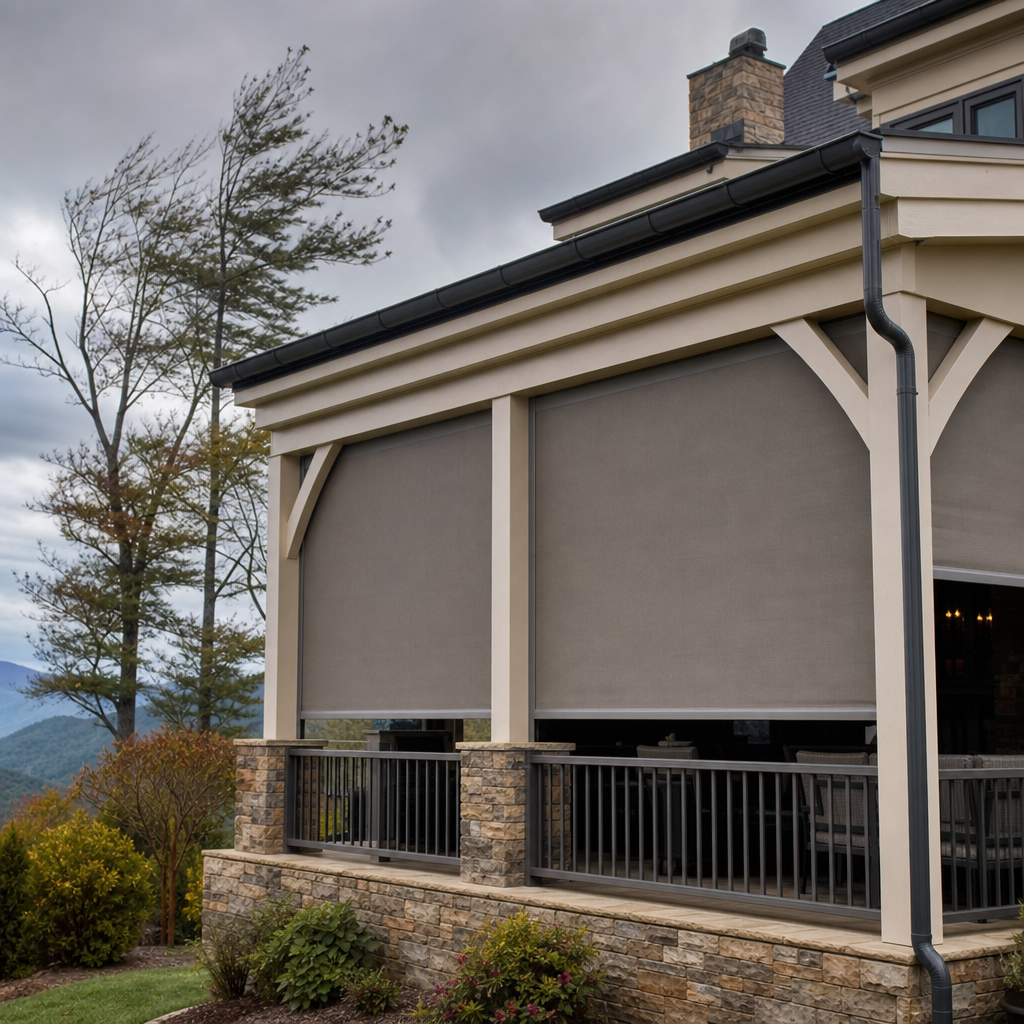

Window Treatments for Open Floor Plan Homes
How to Choose Window Treatments for an Open Floor Plan
Open floor plans create bright, connected spaces where kitchens, dining areas, and living rooms flow together. But that openness can create a design challenge: how do you choose window treatments for several different areas without making the entire space look mismatched—or overly repetitive?
The best window treatments for an open floor plan create visual continuity without requiring every window to look exactly the same. Homeowners can coordinate color, fabric, texture, hardware, or operating style while choosing different treatments based on each area's need for privacy, glare control, insulation, or access to the view.
For homes throughout Asheville and Western North Carolina, that flexibility can be especially valuable. Open-concept homes often feature everything from kitchen windows and French doors to large living-room windows overlooking the mountains.
The goal isn't to make every window identical. It's to make the entire space feel intentional.
Should Window Treatments Match in an Open Floor Plan?
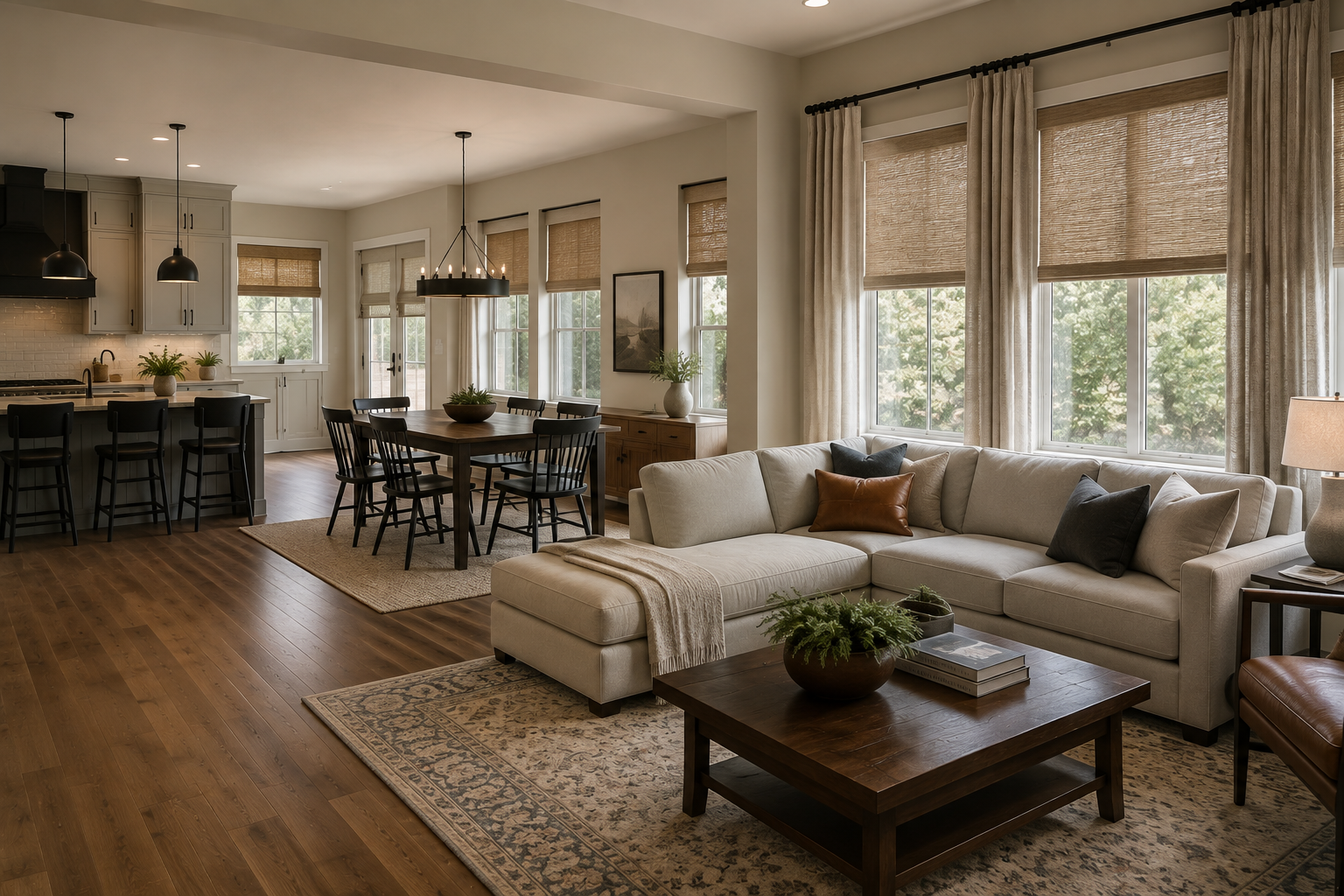
Window treatments in an open floor plan should coordinate, but they don't necessarily need to match.
That's an important distinction.
When you can see the kitchen, dining room, and living room from one position, dramatically different window coverings can make the space feel disconnected. Using exactly the same treatment everywhere, however, may not make sense functionally.
A kitchen window might need a clean, practical roller shade. The dining area could benefit from the softness of a Roman shade. The living room might call for layered window treatments or motorized shades across larger windows.
You can connect these treatments through common design elements such as:
- Similar colors or undertones
- Coordinating fabrics
- Consistent hardware finishes
- Related textures
- Similar valances or top treatments
- A consistent level of formality
- Repeated materials elsewhere in the room
Think of the window treatments as part of one design story rather than individual decorating decisions.
How Do You Coordinate Different Window Treatments?
Start with the elements that already connect the open space.
Look at the flooring, cabinetry, countertops, wall color, furniture, lighting fixtures, and architectural details. Your window treatments should work within that existing palette.
For example, imagine an open-concept Asheville home with warm wood flooring, soft neutral walls, natural stone, and black metal accents.
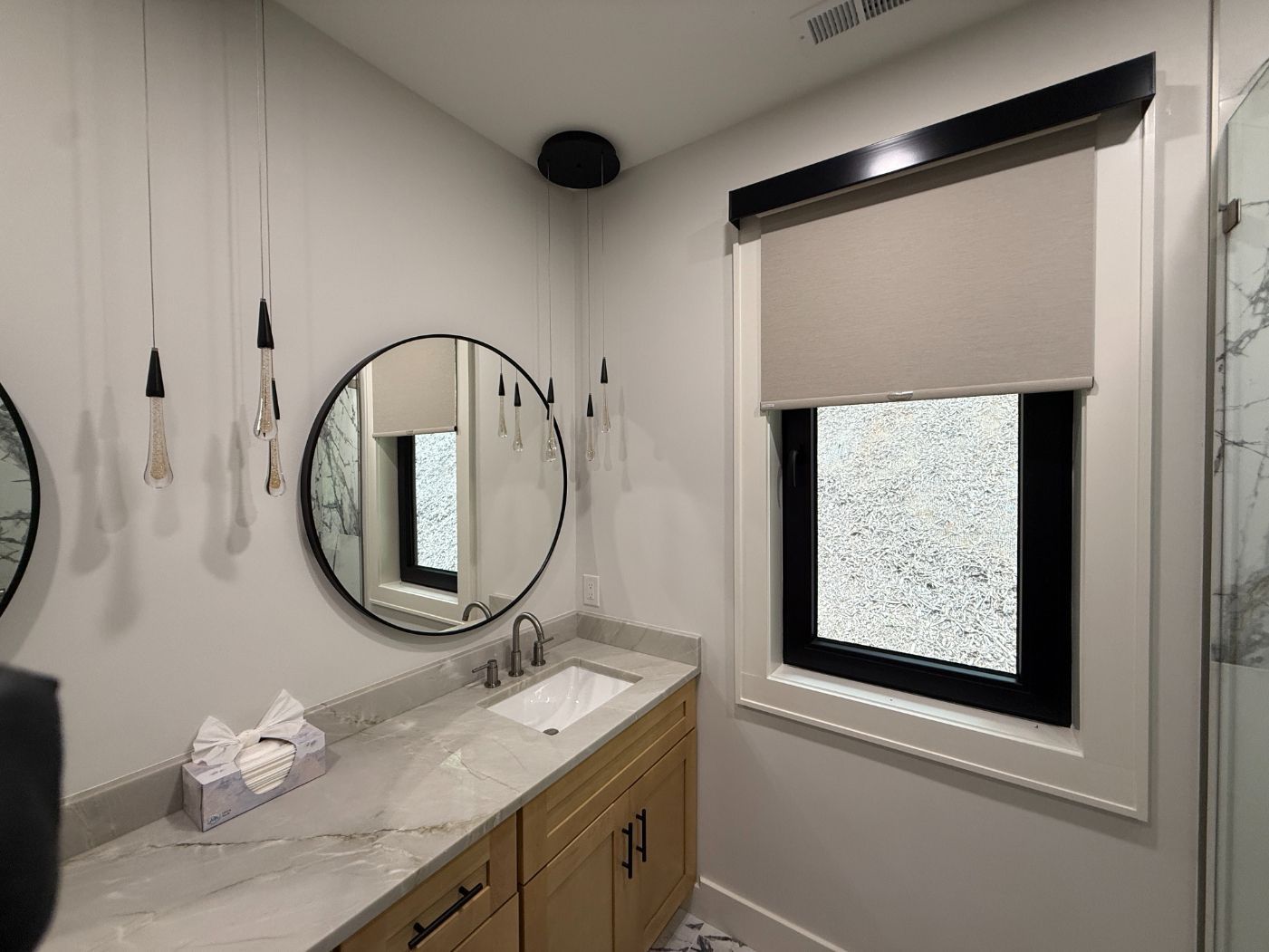
The kitchen might use a neutral roller shade.
The nearby dining area could feature a textured Roman shade in a complementary tone.
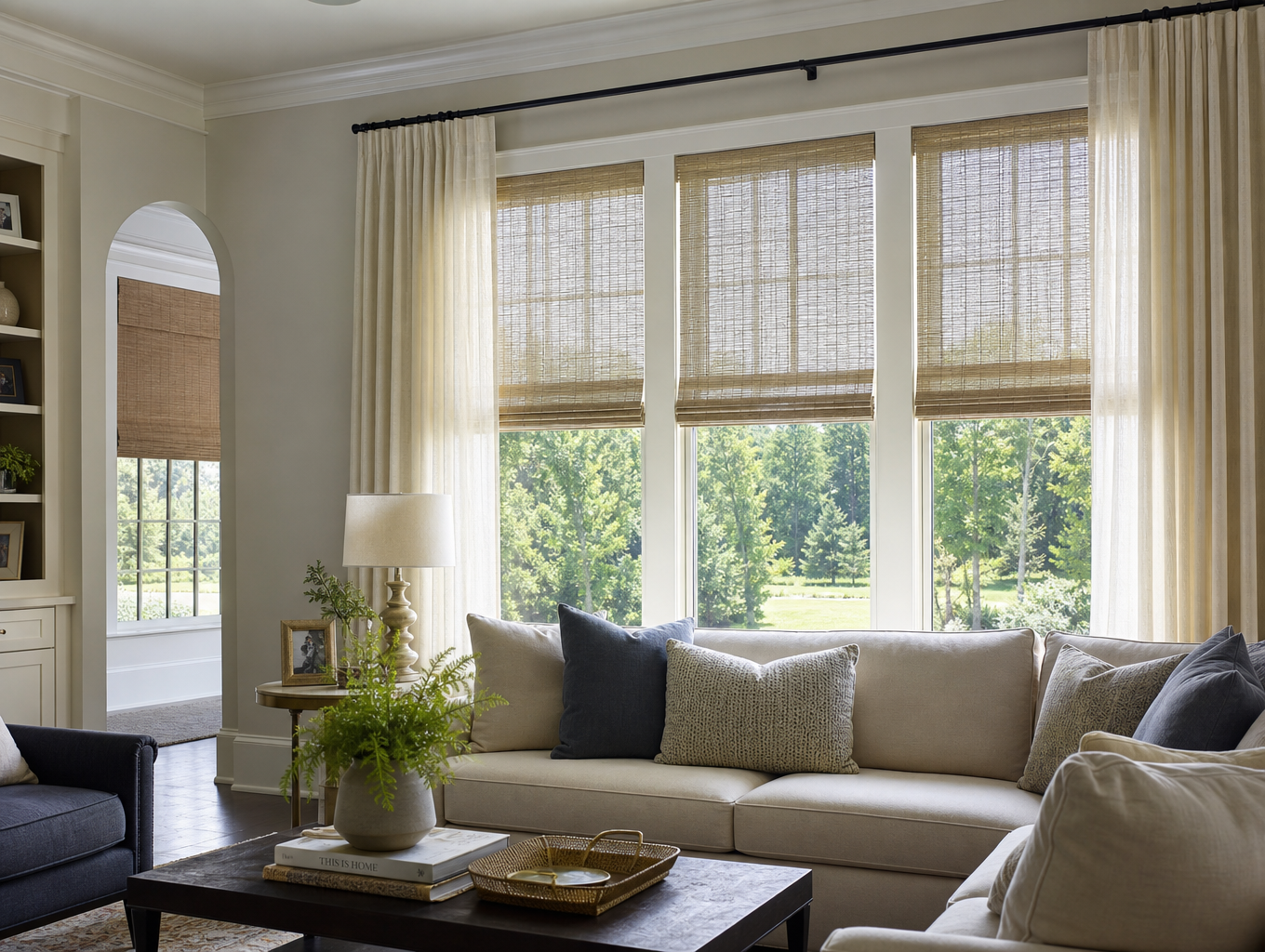
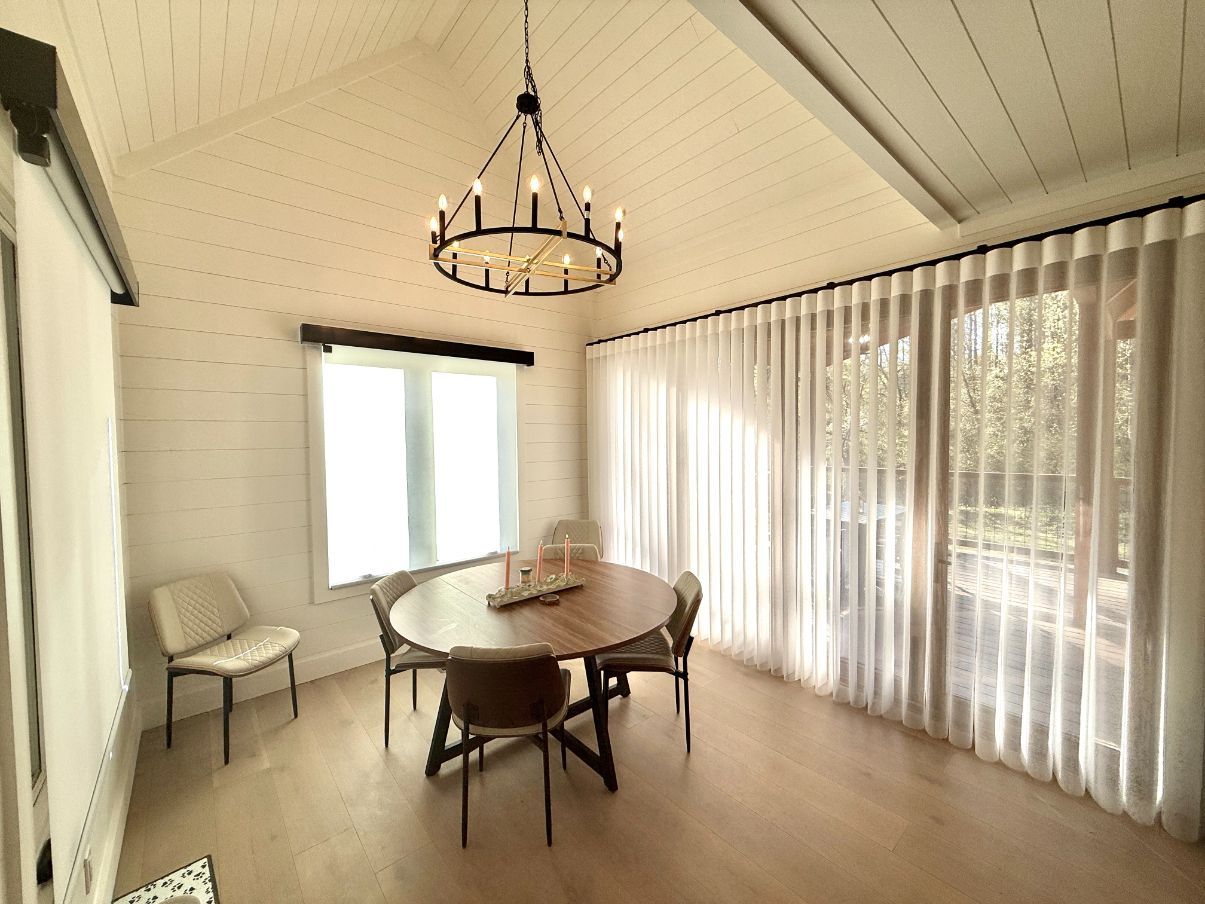
Large living-room windows could use motorized roller shades framed by stationary drapery panels.
The products aren't identical, but the color palette and materials connect them visually.
This approach makes an open floor plan feel collected rather than matched.
Are Layered Window Treatments Good for
Open Floor Plans?
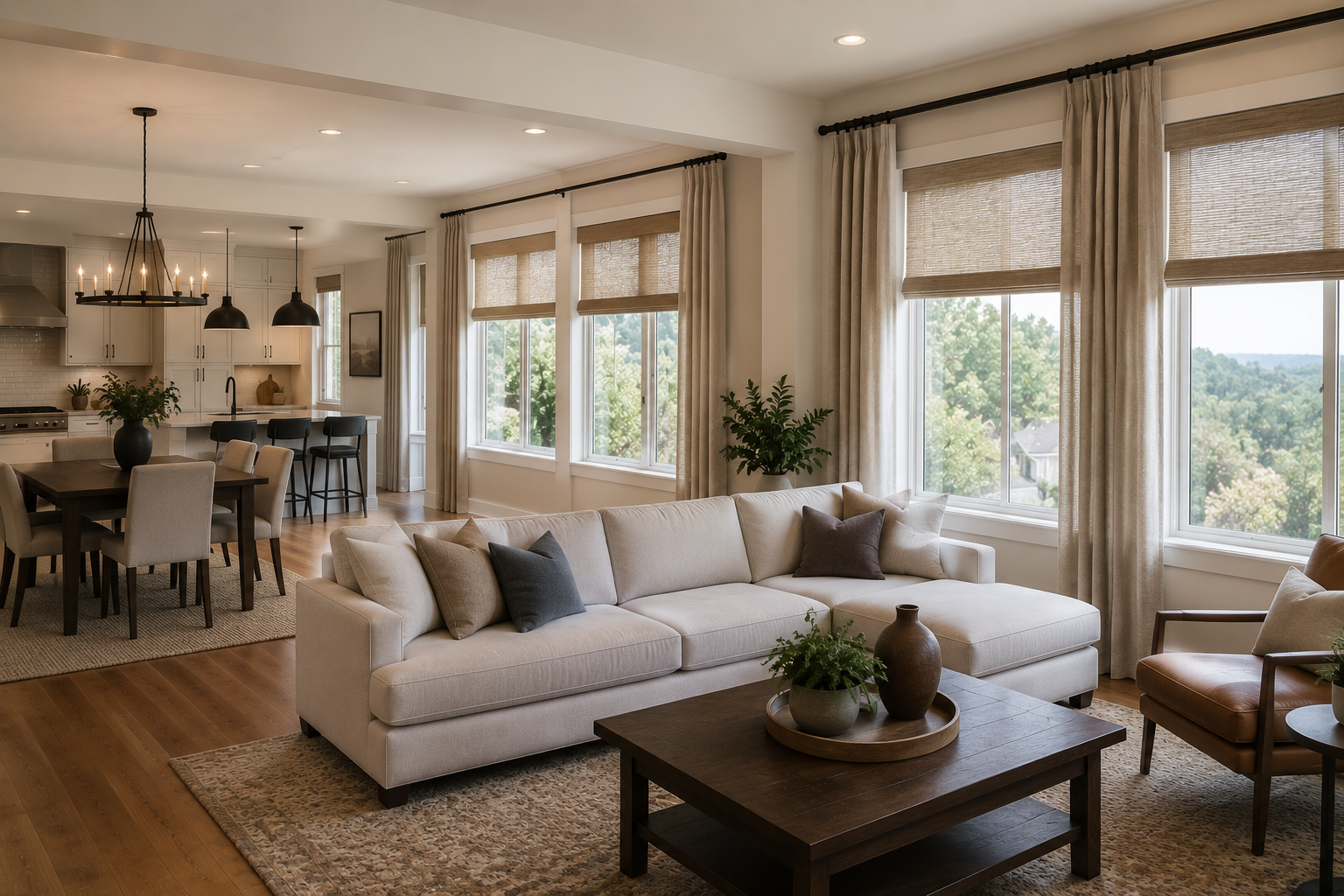
Layered window treatments are particularly effective in open-concept homes because they help bridge functional and decorative areas.
A layered treatment combines two or more window coverings, such as a roller shade with decorative drapery or a woven shade with fabric panels.
In an open floor plan, layering can also become a design tool.
For example, the same roller shade could be used throughout the connected space for consistent light control. In the living or dining area, decorative panels could then be added to create more softness and visual interest.
That gives the homeowner consistency without making every window look the same.
Layered window treatments can also provide:
- Greater control over natural light
- Additional privacy
- More texture and depth
- Improved insulation
- Better glare management
- A more custom, finished appearance
This is especially helpful when one side of an open room receives intense sunlight while another stays relatively shaded.
Why Do Roller Shades Work So Well in
Open-Concept Homes?
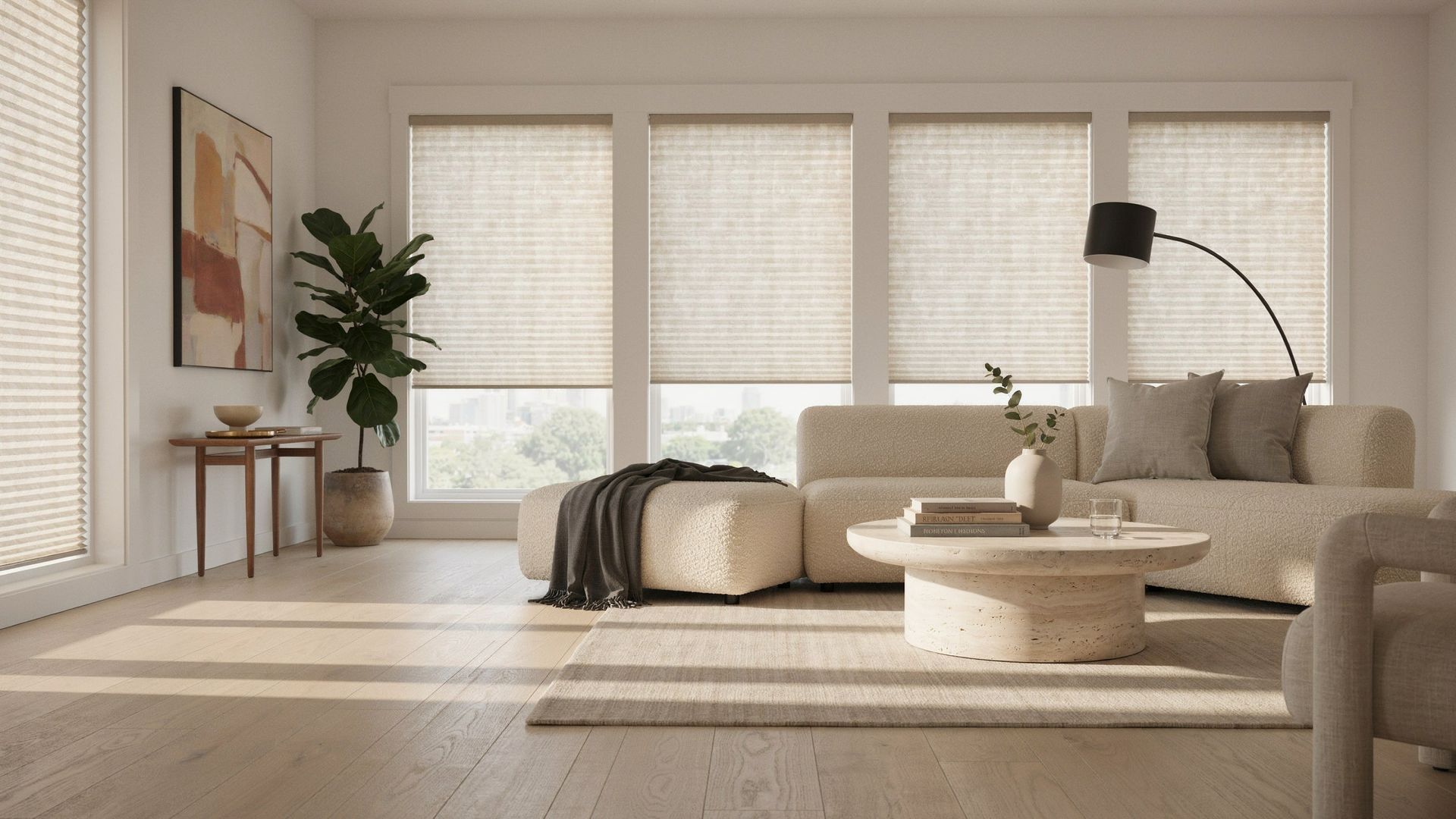
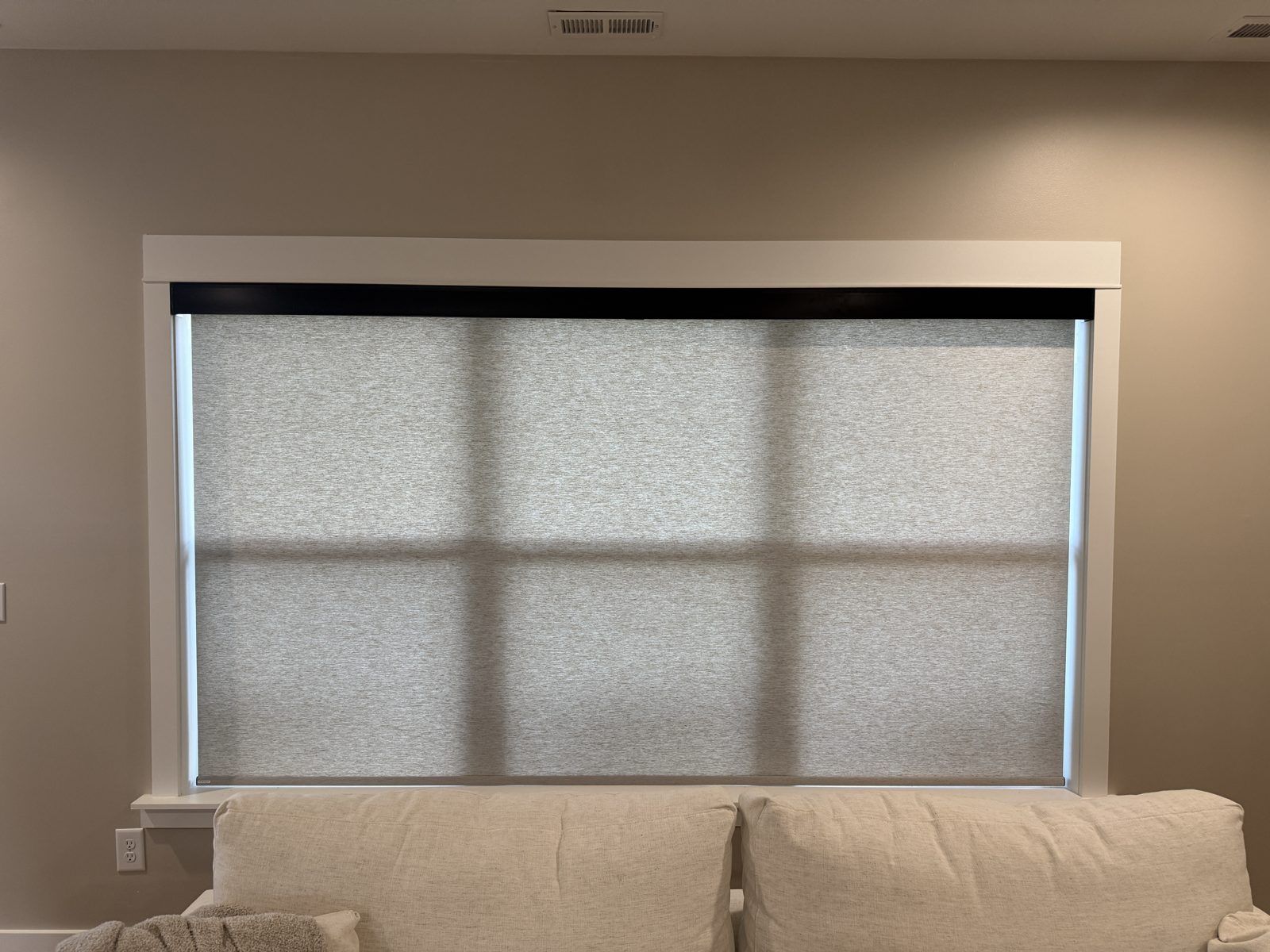
Roller shades are one of the most versatile choices for an open floor plan because their clean profile doesn't compete with the rest of the interior.
When raised, they virtually disappear from the window, keeping sightlines open. When lowered, they can provide privacy, UV protection, glare reduction, or light filtering depending on the fabric selected.
Their simplicity also makes roller shades easy to repeat across several types of windows without overwhelming the room.
A homeowner might use roller shades on:
- Large living-room windows
- Kitchen windows
- Dining-room windows
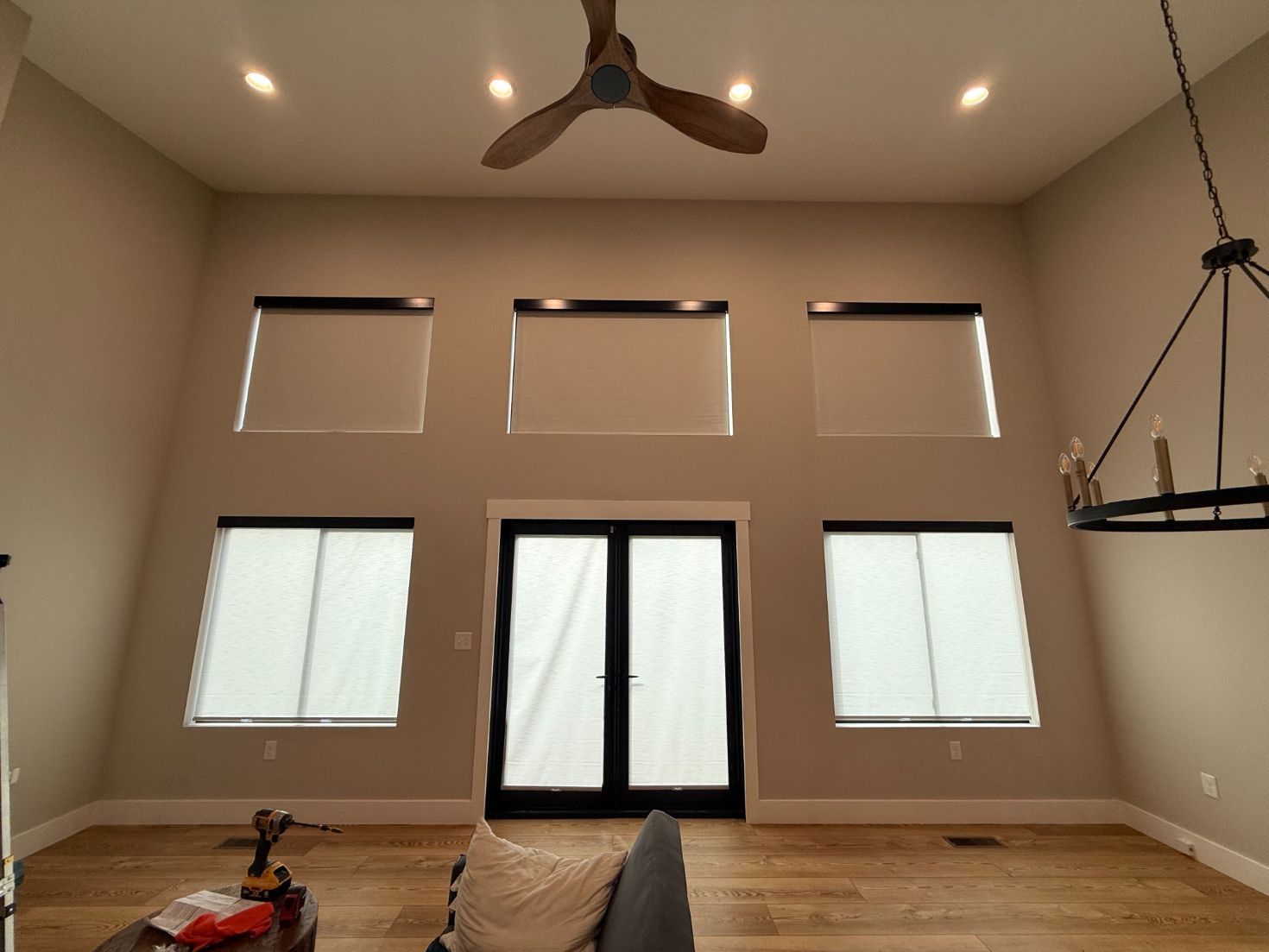
- Patio or deck doors
- Tall or difficult-to-reach windows
Using the same or coordinating roller shade fabrics across these areas creates a subtle sense of continuity.
Decorative layers can then be introduced where the room calls for them.
Can You Mix Roman Shades and Roller Shades?
Absolutely.
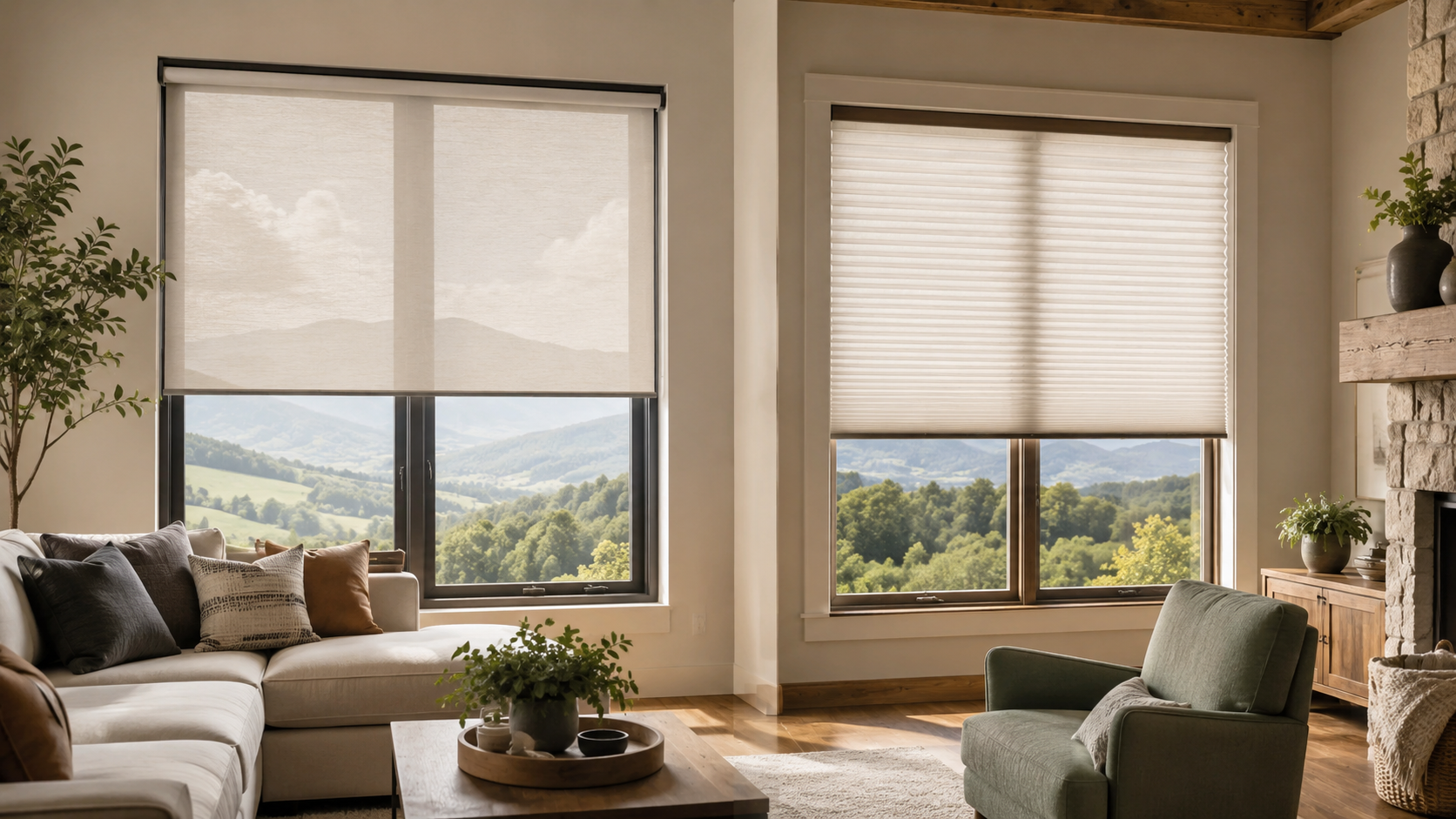
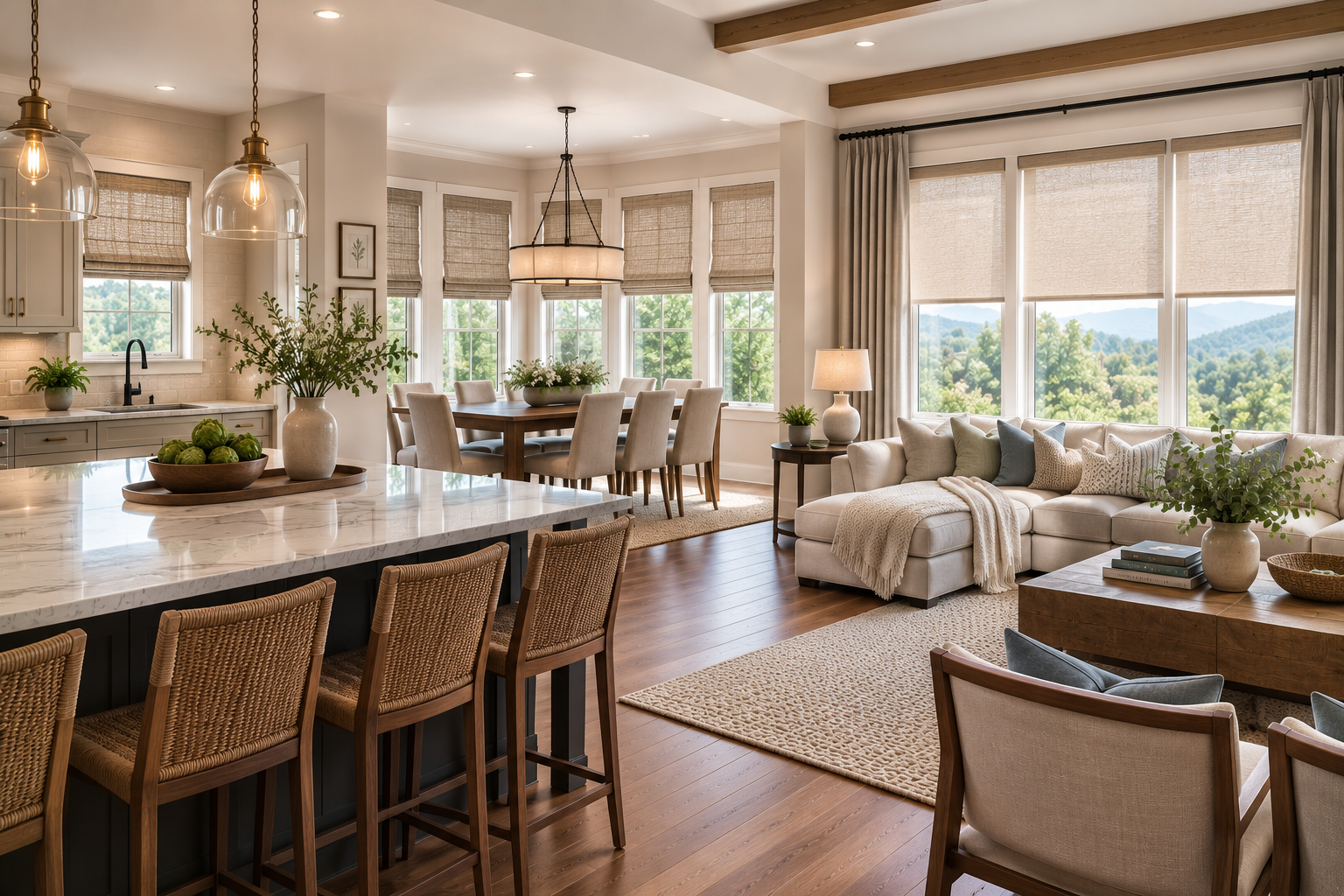
Roman shades and roller shades can work beautifully within the same open floor plan when their colors, materials, and visual weight are coordinated.
Roman shades introduce fabric and softness. That makes them particularly attractive in dining spaces, breakfast areas, or other portions of an open room where you want a more decorative treatment.
Roller shades have a cleaner, more architectural appearance and can be especially practical for large windows or areas where maintaining the view is important.
Instead of asking whether two window treatments match, ask whether they belong in the same room.
That's the more useful design test.
How Can Window Treatments Define Spaces in an
Open Floor Plan?
One of the challenges of an open floor plan is creating individual spaces without putting walls between them.
Window treatments can help.
A dining area framed by elegant Roman shades or drapery can feel slightly more formal than the adjoining kitchen. Clean roller shades can reinforce the streamlined appearance of a kitchen, while layered window treatments can make the living area feel softer and more relaxed.
These subtle differences visually establish zones while maintaining the overall flow of the home.
It's similar to using area rugs, lighting fixtures, or furniture placement to define spaces.
The differences should be intentional, not dramatic.
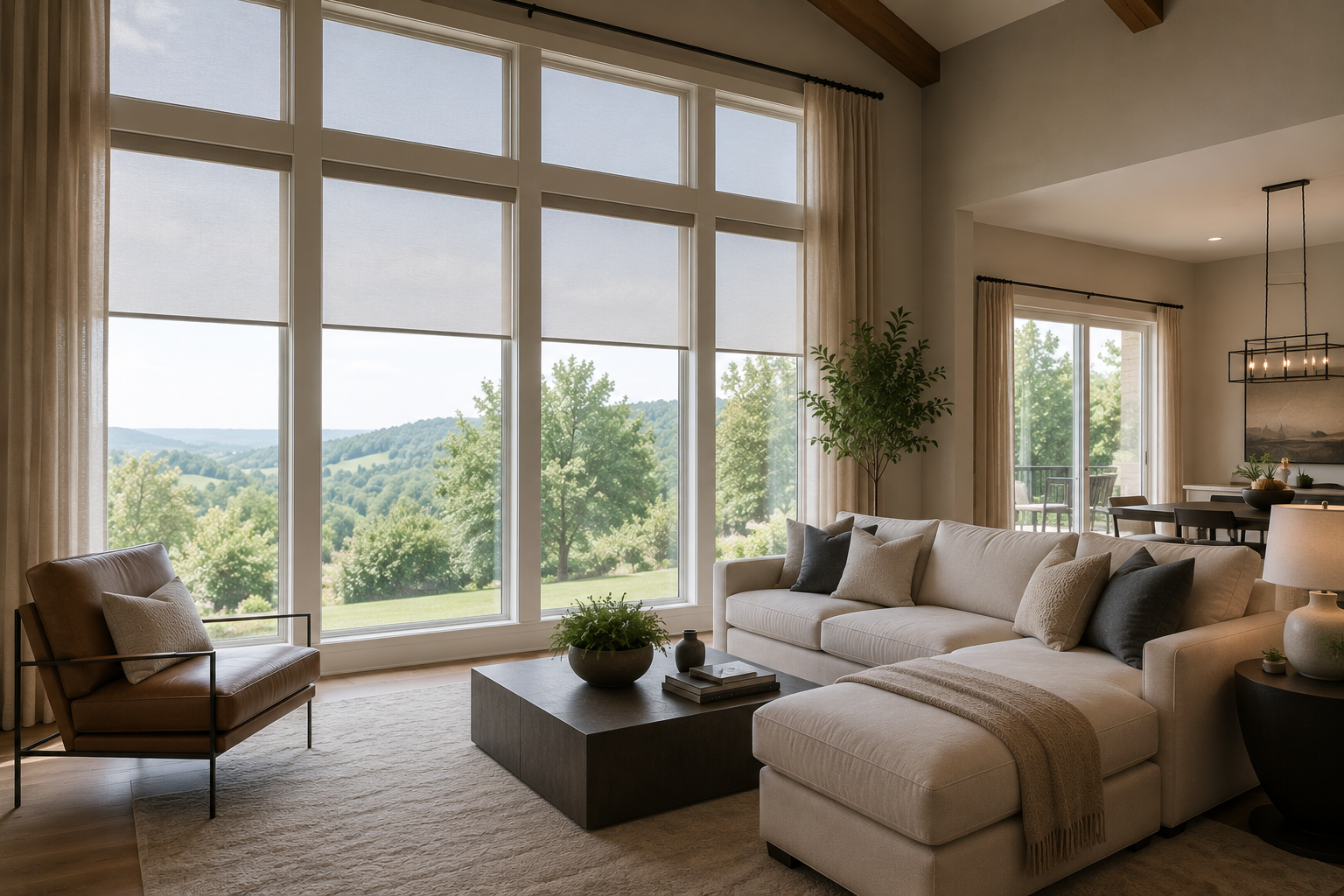
What Window Treatments Are Best for Large Windows?
Open-concept homes frequently feature large windows, sliding doors, or walls of glass designed to maximize natural light and outdoor views.
For these windows, scale matters.
A treatment that works beautifully over a small kitchen window may become difficult to operate across an expansive living-room window.
Roller shades are an excellent option because of their streamlined appearance and ability to accommodate many larger window configurations. Depending on the window and treatment specifications, multiple coordinated shades may also be preferable to one oversized covering.
For homes with beautiful Western North Carolina views, preserving the view when the treatment is open should also be part of the design decision.
A custom solution allows the treatment to work with the architecture instead of hiding it.
How Should You Handle Different Sun Exposure
in the Same Room?
This is one of the biggest reasons custom window treatments make sense in an open floor plan.
A connected room can experience dramatically different lighting conditions.
East-facing windows may receive strong morning sun. West-facing glass can introduce intense late-afternoon glare. North-facing windows may need relatively little solar control.
Putting exactly the same treatment on every window without considering exposure can therefore create unnecessary compromises.
Instead, treatments can be coordinated visually while their fabrics, opacity, linings, or operating functions vary according to the window.
This is where professional design guidance becomes especially useful. A window treatment should be chosen based not only on how it looks at noon during a consultation, but on how that window functions throughout the day.
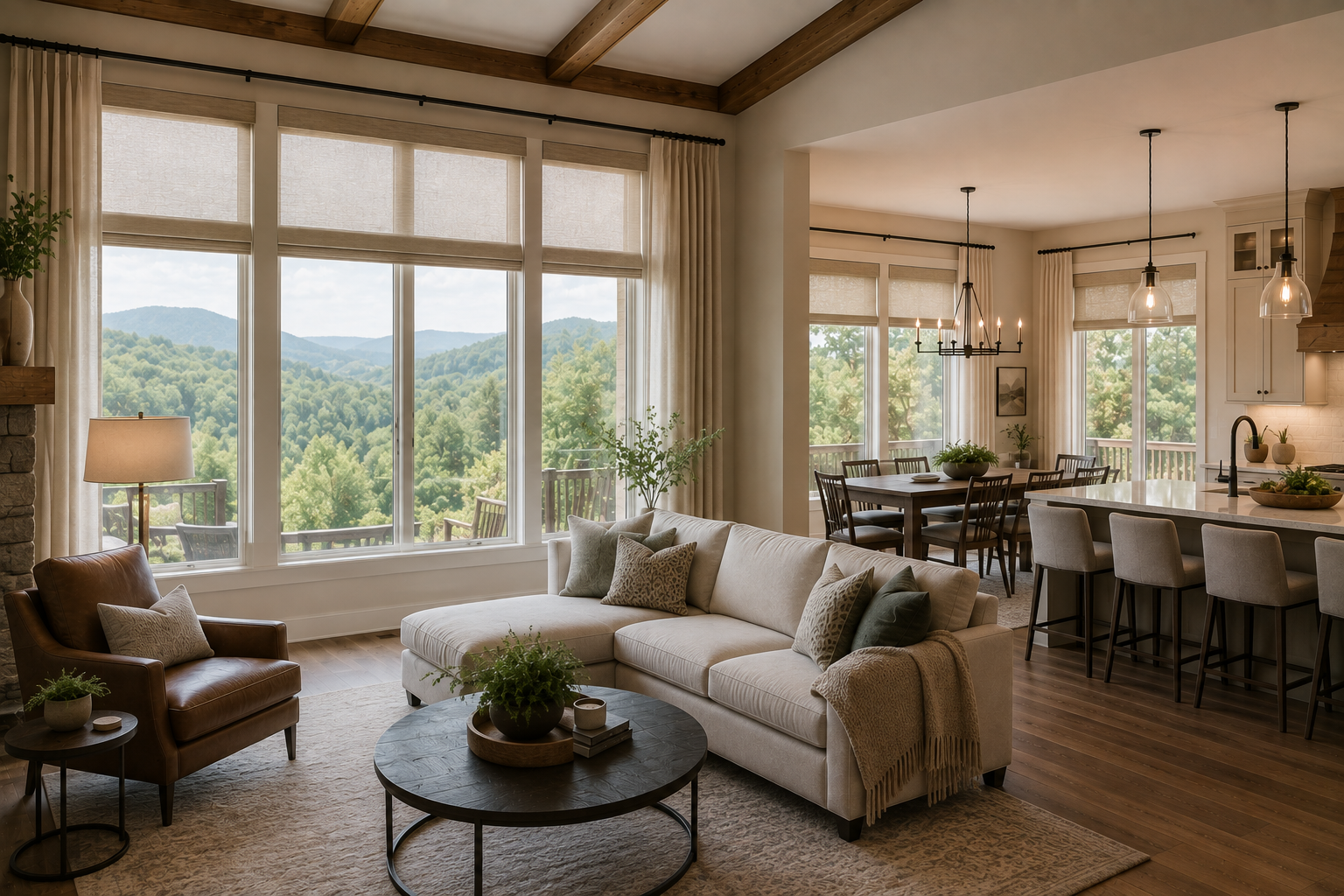
Designing Window Treatments for Asheville's Open-Concept Homes
Open floor plans are particularly well suited to Western North Carolina living. Large windows can bring mountain scenery, wooded surroundings, and changing seasonal light directly into the home.
The right window treatments should enhance that connection rather than compete with it.
Love Is Blinds NC helps homeowners throughout Asheville, Black Mountain, Hendersonville, Arden, Fletcher, Weaverville, Brevard, and surrounding Western North Carolina communities design custom window treatments around the way their homes actually function.
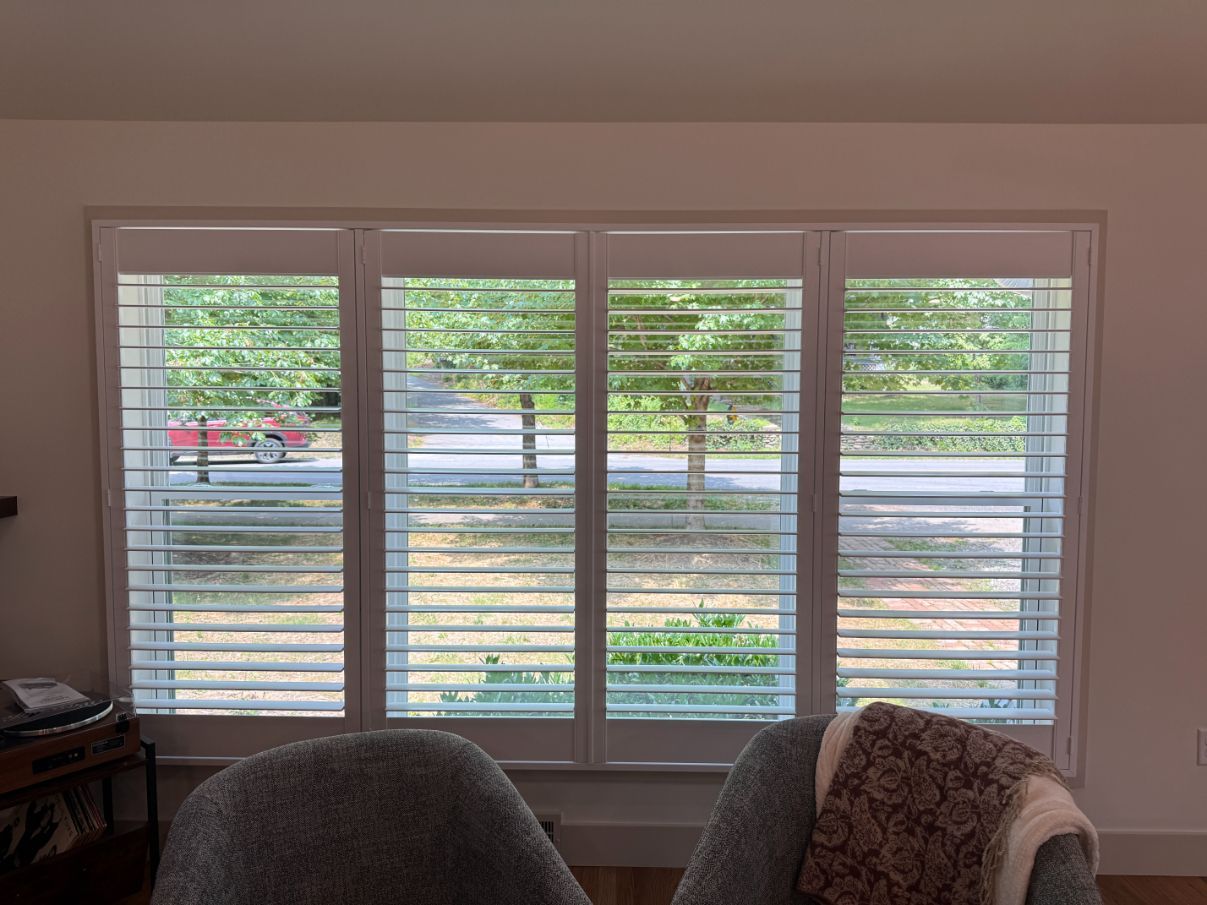
From roller shades and Roman shades to layered window treatments, shutters, and motorized shades, each product can be selected as part of a coordinated whole-home design.
Whether you're furnishing a new open-concept home or trying to bring an existing kitchen, dining room, and living space together, professional measuring and design guidance can help you create a solution that feels cohesive from every angle.
Contact Love Is Blinds NC to schedule a complimentary in-home consultation and explore custom window treatments for your home.
Frequently Asked Questions
Q: Do all window treatments need to match in an open floor plan?
A: No. Window treatments should coordinate visually, but different areas can use different products. Repeating colors, fabrics, textures, or hardware can create continuity while allowing each treatment to serve the needs of its particular space.
Q: What are the best window treatments for an open floor plan?
A: Roller shades, Roman shades, layered window treatments, shutters, and motorized shades can all work well. The best combination depends on window size, sun exposure, privacy requirements, architecture, and the design of the connected spaces.
Q: Can I use roller shades in the living room and Roman shades in the dining room?
A: Yes. Roller and Roman shades can be mixed successfully when their colors, materials, and overall design style complement each other.
Q: Are layered window treatments good for an open-concept home?
A: Yes. Layering makes it possible to maintain a consistent base treatment throughout a space while adding drapery or another decorative layer to selected windows that need more softness, privacy, or visual emphasis.
Q: Should I motorize all the shades in an open floor plan?
A: Not necessarily. Motorization is particularly useful for large, tall, hard-to-reach, or frequently adjusted shades. A custom design can determine where automation provides the greatest benefit.
Q: How do I choose window treatments for different sun exposures?
A: Consider each window's orientation and how sunlight changes throughout the day. Treatments can coordinate visually while using different fabrics, opacity levels, or functionality to address morning sun, afternoon glare, privacy, or UV exposure.